The site work division of ICFHome.ca · Building since 1979 · Insured to $2,000,000 · 705-533-1633
Pond diggingOur own excavatorsGraded and finished
Pond Digging in Tiny, Midland and Simcoe County
We dig ponds with our own excavators, shape the banks so you can walk and mow them, and put the dirt to work somewhere else on your lot. Whether the pond holds water is decided by your ground, so that is where we start.
Updated November 2026 · Georgian Bay Siteworks, the site work division of ICFHome.ca
Insured to $2,000,000Site work division of ICFHome.caBuilding since 1979250+ projects in Simcoe County
Quick answer: a pond is a hole that has to hold water, so the first job is finding out what your ground is and where the water table sits. A test hole tells us. After that it is digging, shaping the banks, and finding a home for a lot of dirt.
Will a pond hold water on your lot?
That depends on two things: what the soil is, and how high the ground water sits.
- Clay holds water. A pond dug in clay fills from rain and runoff and generally stays full.
- Sand does not. Much of the ground around Georgian Bay is sand. A pond in sand only holds water if you dig down into the water table, and then the pond level goes up and down with it through the year.
- A test hole settles it. We dig one before anybody talks about size or price. It beats guessing, and it is cheaper than a dry pond.
Builder truth: the same high water table that makes a septic bed expensive is what makes a pond easy. Wet lots are not all bad news.
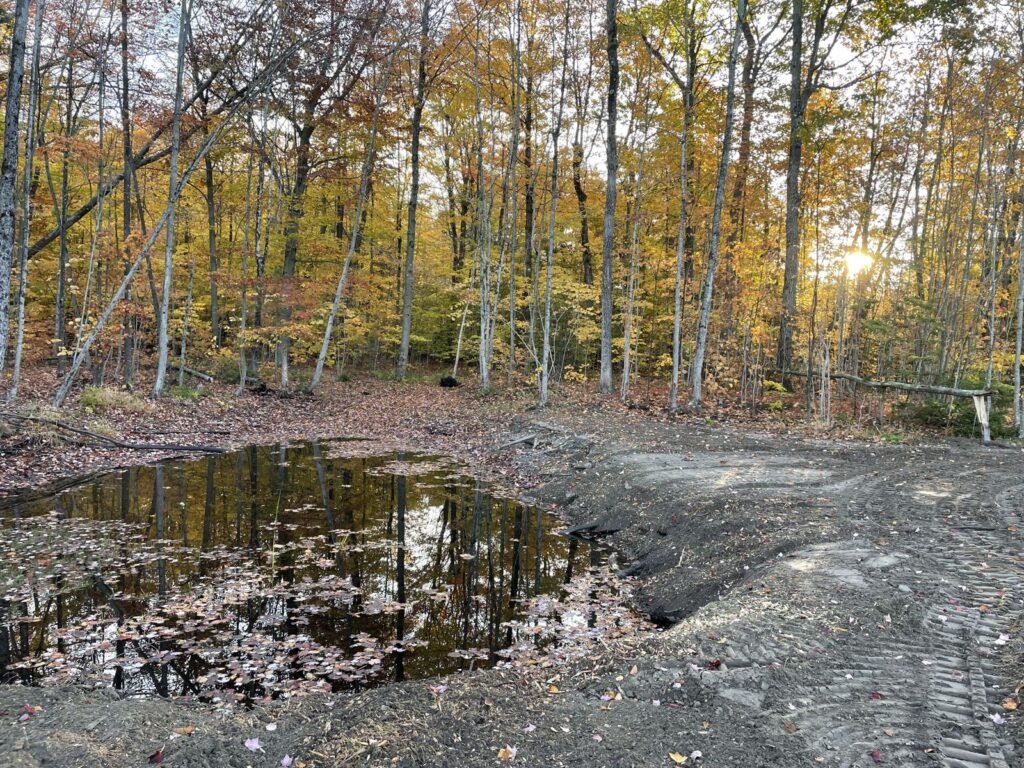
What the job involves
- Test hole. Soil and water table first.
- Strip the topsoil and pile it. You will want it back on the banks.
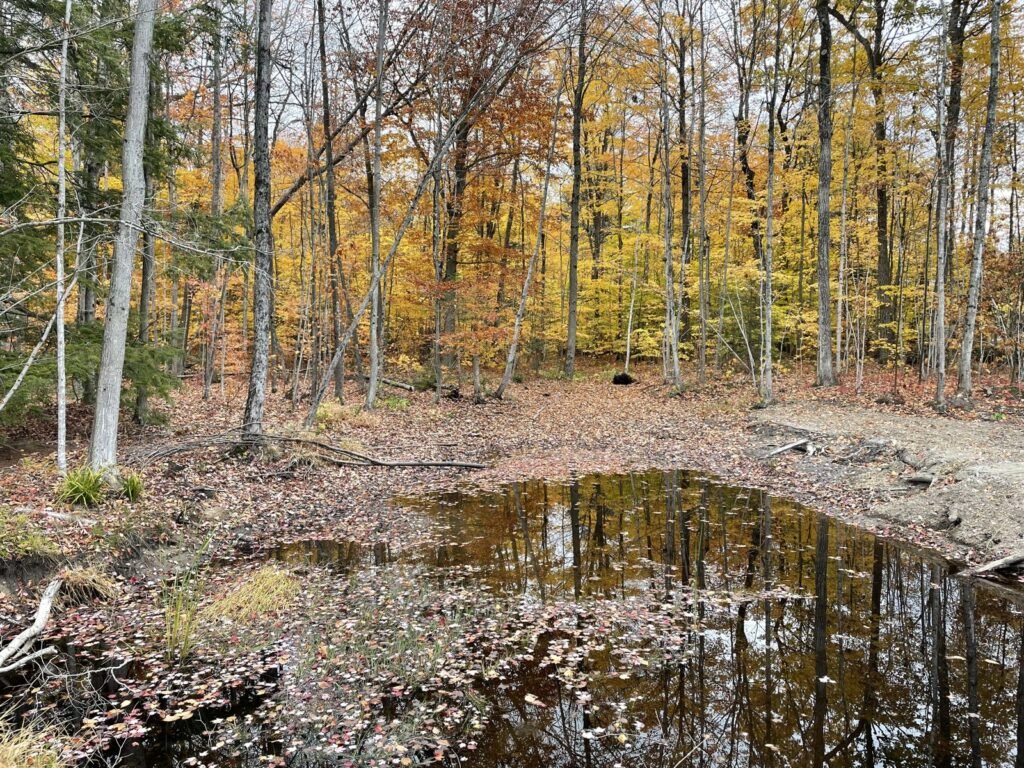
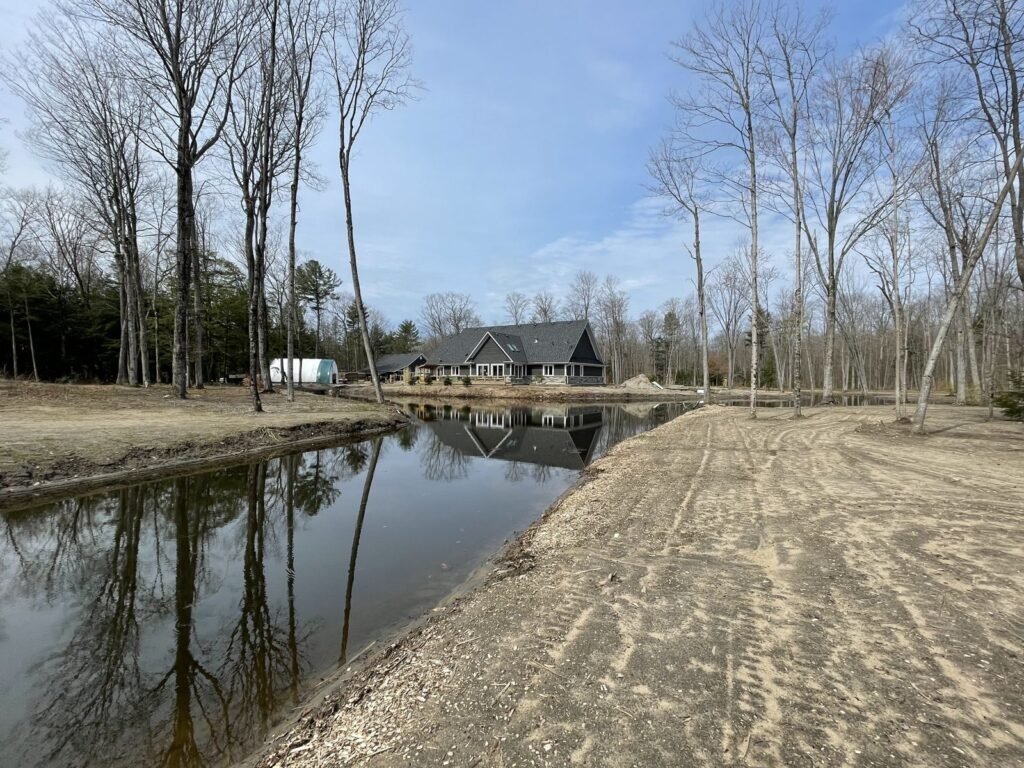
- Dig and shape. A shallow edge you can walk out of and a deeper middle, with banks gentle enough to mow.
- Place the dirt. A pond makes a surprising pile. Using it on your own lot to build up a low area or a berm is far cheaper than trucking it away. If it has to leave, the excess soil rules apply.
- Finish. Topsoil back on the banks, graded, and seeded or sodded so they do not wash into your new pond.
Rules to check before you dig
A pond in the middle of your own dry field is usually simple. A pond near water is not. Before we dig:
- Call your township. Many have fill or site alteration by-laws, and a pond moves a lot of soil.
- Find out if a conservation authority regulates your lot. Where one does, digging near a wetland, a stream or a floodplain needs its permit first. The NVCA guide explains how that works.
- Leave streams and wetlands alone. A pond that connects to a creek, a wetland or the lake brings in provincial and federal rules. We do not dig those without the approvals in hand.
- Pumping water out is separate. In Ontario, taking more than 50,000 litres a day from a pond needs a provincial permit.
We sort out which of these apply to your lot before the machine shows up. Our permits page covers who to call.
What a pond costs
We price a pond after the test hole, because the hole tells us most of what moves the number:
- Size and depth. More dirt, more machine hours.
- Where the dirt goes. Spread on site is cheap. Trucked away is not.
- How wet the dig is. Digging below the water table is slower.
- Access. Whether we can get a full-size excavator and a truck to the spot.
For machine rates, see the excavation cost guide. You get the pond price in writing before we start.
Frequently Asked Questions
Can you dig a pond in sand?
Yes, if the water table is high enough to fill it. In sand, the pond level follows the ground water up and down through the year. A test hole tells us before you spend money.
Do I need a permit to dig a pond in Ontario?
It depends where it is. A pond on dry ground away from any water may need nothing more than a call to the township about its fill by-law. Near a wetland, stream, floodplain or shoreline, expect a conservation authority or provincial approval first.
What do you do with all the dirt?
Use it on your lot wherever we can: filling a low spot, building a berm, or shaping the grade. Hauling it away costs more than digging it.
Can a pond help with drainage?
Sometimes. A pond can give water from a ditch or swale somewhere to go. It has to be planned with the grading so it does not just move the wet spot.
Thinking About a Pond? Start With a Test Hole.
We will dig one, tell you straight whether your ground will hold water, and give you a price in writing.
Rather we call you?
Leave your name, number and town. We call back weekdays and give you a price in writing. Privacy policy.