The site work division of ICFHome.ca · Building since 1979 · Insured to $2,000,000 · 705-533-1633

Septic Landscaping2026Tiny, Tay, Midland, Wasaga, Collingwood
Landscaping Over a Septic Bed: What You Can and Can’t Do
Grass is the best cover for a septic bed, shallow-rooted perennials are fine, and trees and shrubs belong roughly 6 m away; do not add fill, paving or structures on the bed without approval. This page covers planting, fixing the lawn after septic work, and shaping a raised bed so it looks like yard instead of a burial mound.
Updated October 2026 · Georgian Bay Siteworks, the site work division of ICFHome.ca
Insured to $2,000,000Site work division of ICFHome.caBuilding since 1979250+ projects in Simcoe County
Why the Bed Is Fussy About What Is On Top
A septic bed needs two things from the surface: air getting in and water getting out. The grass on top pulls moisture up and breathes it off. Pave it, pile soil on it, or let tree roots in and the bed slowly suffocates.
Tiny’s re-inspection program lists dense vegetation and hard surfaces over the leaching bed as deficiencies. So this is not just good advice, it is what the inspector is looking at.
What You Can Plant, What You Can’t
| Plant | On the bed? | Notes |
|---|---|---|
| Lawn grass | Yes – best choice | Keep it mowed. Long grass is fine, bare soil is not. |
| Low native grasses and wildflower mixes | Yes | Good for cottage lots where you do not want to mow. No digging deep to plant. |
| Shallow-rooted perennials (hostas, daylilies, groundcovers) | Yes, sparingly | Keep beds small and do not dig deeper than a hand trowel. |
| Vegetable garden | No | Tilling disturbs the cover, and you do not want effluent near food. |
| Shrubs | No | Keep them off the bed and well clear of the tank. |
| Trees | No – about 6 m away | The Oro-Medonte Septic Smart guide shows 6 m from the bed. Willows and poplars go farther away still; they chase water. |
Builder truth: a willow planted near a septic bed is a plumber’s retirement plan.
No Extra Fill Without Approval
The soil cover over a bed is part of the design. The designer specified how deep the pipes sit and how much cover goes on top. Add another 300 mm of topsoil to level the yard and you have changed the system: less air gets down, frost sits differently, and the bed may no longer match its permit.
- Do not add fill on the bed or mantle without checking with your township’s sewage system staff first. In Tiny, that is Tatham Engineering.
- Do not cut into the bed or its side slopes to make room for a patio or path.
- Do not pave or put pavers, interlock or gravel parking over it.
- Keep downspouts and grading from sending roof water across the bed. Divert surface water away, as the Tay guide says.
Fixing the Lawn After Septic Work
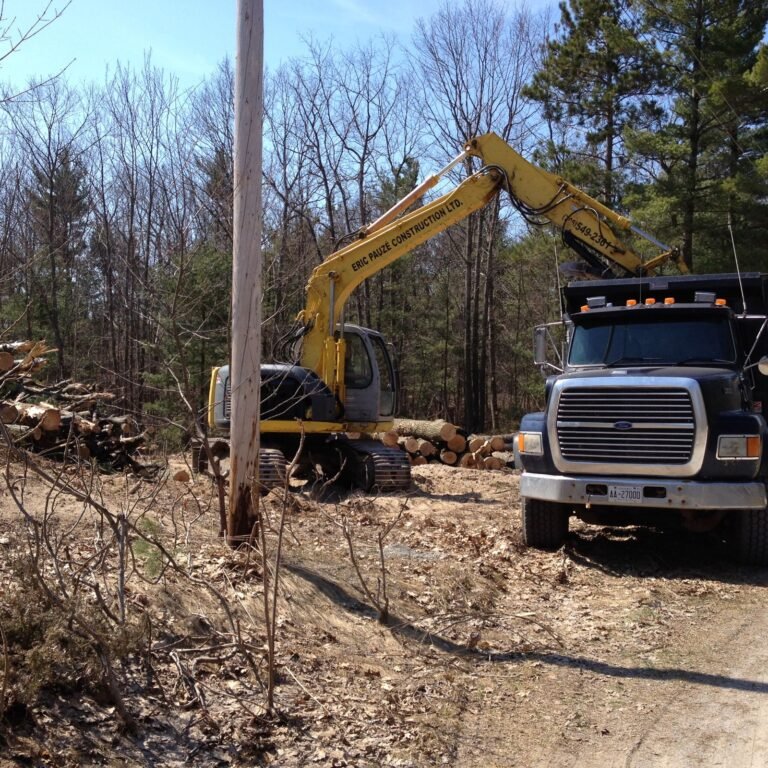
A septic job leaves a mess. Machines, sand trucks and stockpiles take out a lot of lawn beyond the bed itself. Here is how we finish it, and what we do not do.
Topsoil
Screened topsoil spread to the depth the design allows over the bed, and to normal lawn depth everywhere else. Fine graded so water runs off the bed, not onto it.
Sod
Sod gives you a finished bed cover in a day and holds slopes on raised beds. Water it like it is your job for the first few weeks.
Seed
Cheaper, slower, and it washes off slopes in a heavy rain. Fine on flat areas if you are patient.
No hydroseeding
We do not hydroseed. If you want it, hire it separately after the grading is done.
Straight talk on sod: we do not warrant sod. Once it is laid, whether it lives depends on watering, and that is in your hands, not ours. Damage from bad weather and natural disasters is not covered either. Our sod and topsoil cost guide has the numbers.
Making a Raised Bed Look Like Lawn
A raised bed on Bay sand can sit a metre or more above the yard. Built with steep sides, it looks like something is buried there, which, to be fair, it is. Built well, it reads as a gentle rise in the lawn.
- Flatter side slopes. The designer sets the minimum. Within that, a longer, gentler taper looks natural and is easier to mow.
- Blend into the yard grade. Feather topsoil out past the toe of the slope so there is no hard edge. This happens off the bed and mantle, not on them.
- Sod the slopes. Sod holds the sand in a downpour; seed on a slope often ends up at the bottom.
- Mark the lids. Risers to grade with a lid you can find. A flower pot on a riser is fine; a deck is not.
- Plant the edges, not the top. Shrubs and trees can soften the view if they stay well back from the bed.
More on finishing a lot in our landscaping services and finishing a new build lot guides.
Want the Septic Area Finished Properly?
We grade, topsoil and sod around new and replaced septic systems so they shed water and look like lawn.
Related guides
Frequently Asked Questions
What can I plant over a septic bed?
Grass is best. Low native grasses and a few shallow-rooted perennials are fine. Avoid vegetable gardens, shrubs and trees.
How far should trees be from a septic bed?
About 6 m, as shown in local Septic Smart guides. Water-loving trees like willows and poplars should be farther.
Can I add topsoil over my septic bed?
Not without approval. The cover depth is part of the design, so check with your township’s sewage system staff before adding fill.
Can I put pavers or gravel over a septic bed?
No. Hard surfaces block air and evaporation, and Tiny’s re-inspection program lists them as a deficiency.
Is sod warranted after septic work?
No, we do not warrant sod, because its survival depends on watering after it is laid. Weather and natural disaster damage are not covered either.
Do you hydroseed after septic installs?
No, we do not hydroseed. We finish with fine-graded topsoil and sod.