The site work division of ICFHome.ca · Building since 1979 · Insured to $2,000,000 · 705-533-1633

Lot Clearing Rules2026Tiny, Tay, Midland, Wasaga, Collingwood
Lot Clearing Rules: Burning, Nesting Season and Boundaries
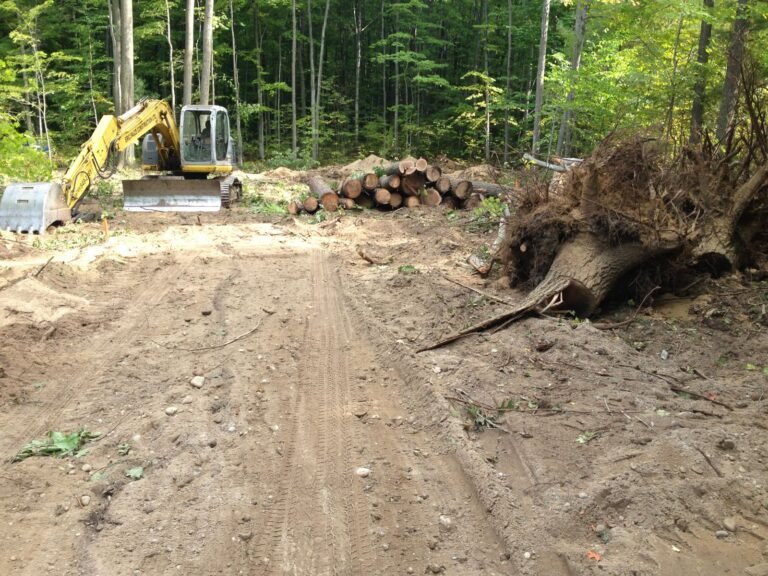
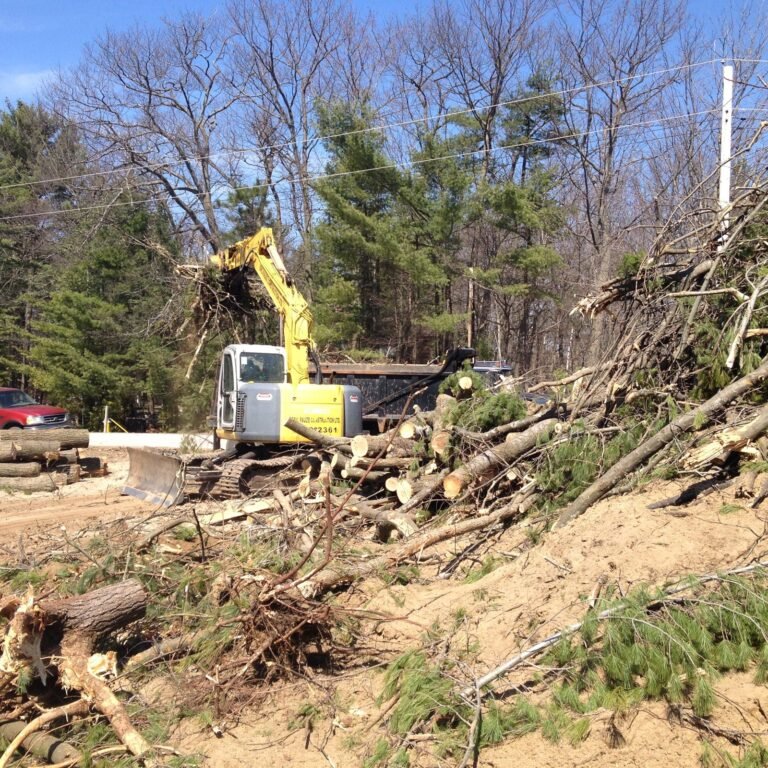
The best window for clearing a lot around Georgian Bay is fall through winter: it is outside the early April to late August bird nesting period, and in Tiny Township large land-clearing burns are not allowed from May 15 to September 30 anyway. Before any saw starts, you also need the boundary stakes found, utility locates done and conservation authority mapping checked. Here is the whole checklist, plus what happens to the brush, logs and stumps.
Updated October 2026 · Georgian Bay Siteworks, the site work division of ICFHome.ca
Insured to $2,000,000Site work division of ICFHome.caBuilding since 1979250+ projects in Simcoe County
Find the Lines Before You Cut
The most expensive tree on any clearing job is the one that belonged to the neighbour. Fences, old blazes on trees and “the realtor said it goes to that big pine” are not property lines.
- Get your survey out. If the corner bars cannot be found, have an Ontario Land Surveyor restake them.
- Walk the lines with us before clearing and flag them with tape you can see from the machine seat.
- Leave a buffer along the lines. Trees right on the line belong to both owners, and taking one is a conversation, not a decision.
- Check any town tree rules for your lot size. Our tree cutting permits by town guide has the table.
Builder truth: restaking a few corners costs far less than one argument with a neighbour over a 60-year-old oak. Stakes first, saws second.
Locates Come Before Stumps
Cutting trees is above ground. Pulling stumps is digging, and digging needs locates. Ontario One Call is free, at 1-800-400-2255 or online (Severn Township’s summary), and the legislated turnaround is 5 business days, though delays happen. Our locates guide walks through it.
One Call locates the lines its member utilities own. Private lines you own, such as a buried feed to a garage, a well line or an old septic pipe, are usually not on their map. Tell us where you think those run, and we dig carefully there.
Bird Nesting Season
Environment and Climate Change Canada puts Simcoe County in nesting zone C2: early April to late August, with forest nesting busiest from roughly late May to late July. The federal rules protect nests and eggs, and the page is clear that working outside the period does not excuse harming an active nest you find.
So we do the big clearing from October to March. If a lot has to be cleared in season, for a building start that cannot wait, it gets checked for active nests first and we work around them. That can mean leaving one tree standing for a few weeks.
Burning Brush in Tiny and Next Door
Tiny Township’s Open Air Burning By-law 15-027 sets three classes of fire. The one that matters for lot clearing is Class B.
| Tiny rule | Class B land-clearing fire |
|---|---|
| Maximum size | 6 m in diameter or height |
| Season | No Class B burns from May 15 to September 30 |
| Distance | 30 m from buildings, hedges, fences, roads, overhead wires and combustibles, with a 7 m clear space around the fire |
| Wind | No burning when reported wind is over 20 km/h |
| What can burn | Brush and clean, untreated wood only. No tires, plastic, shingles or painted wood. |
| Supervision | Someone in constant attendance with tools or water, fire out before leaving |
| Approval | Class B needs approval from the Chief Fire Official or designate |
Every outdoor fire in Tiny needs a permit. The Township’s permit page lists the recreational permit at $30 a year and a $365 fine for burning without one, plus possible fire department charges. During a fire ban, all permits are suspended. In July 2026, Tiny banned all open-air burning for several days, so check the Township’s fire rating on the morning you plan to light.
Tay Township is stricter on size. Its By-law 2019-51 limits fires to a burn area of no more than one cubic metre, 20 feet from combustibles, and bars yard waste burning in some areas, including the Georgian Bay side of Highway 12. That by-law has been amended since, so confirm the current version with Tay. For Midland, Penetanguishene, Wasaga Beach and Collingwood, check with the town fire department before planning a brush fire at all.
Conservation Authority Areas
If your lot is in a regulated area, the trees may be the easy part. Grading, stump pulling and filling near wetlands, shorelines or watercourses is the work a conservation authority regulates. The NVCA covers Wasaga Beach, Collingwood and Springwater, among others, and its permit FAQ warns of fines up to $50,000 for work without a permit. Tiny has no conservation authority. Our NVCA permit guide explains how to check your property.
Where the Brush, Logs and Stumps Go
Chip it
Brush goes through the chipper and comes back as mulch for paths and planting beds. Clean, quiet, and no burn permit needed.
Haul it
When there is too much to use, it goes off site by truck. Spring half-load season, roughly March to April, can slow hauling on Tiny roads.
Mill it
Good straight logs go on our portable sawmill. See mill your trees into lumber.
Burn it
In Tiny, under a Class B permit, between October and mid-May, in the right wind. Cheap, but it needs the conditions to line up.
Stumps
Ground under lawn areas, dug out completely under the house, driveway and septic bed. Our stump grinding cost guide has the numbers.
Firewood
Hardwood cut to length and left in a pile for you. Popular with cottage owners and the cheapest disposal option there is.
The Clearing Year, Month by Month
- September: survey stakes found, permits checked, locates called, trees flagged.
- October to November: clearing and chipping. Class B burns allowed again in Tiny from October 1.
- December to February: frozen ground is good for machines on soft lots and protects the soil from ruts.
- March to April: half-load season limits trucks on many roads; check our half-load season tool. Nesting season starts in early April.
- May to August: nesting season. Excavation and building go ahead on cleared ground; new clearing waits or gets a nest check first.
Clear It Once, Clear It Right
Send us your survey and lot address. We will check the rules, plan the timing and give you a written price for clearing, stumps and brush.
Related guides
Frequently Asked Questions
When is the best time of year to clear a lot in Simcoe County?
Fall through winter. It avoids the early April to late August bird nesting period, frozen ground protects soft lots, and Tiny allows large land-clearing burns outside May 15 to September 30.
Do I need a permit to burn brush in Tiny Township?
Yes. Every outdoor fire in Tiny needs a permit, and a land-clearing fire up to 6 m is a Class B burn that needs approval from the Chief Fire Official. Burning without a permit carries a $365 fine.
Can I burn brush piles in the summer in Tiny?
Not large ones. Tiny’s by-law bans Class B land-clearing fires from May 15 to September 30, and all burning stops during a fire ban.
Do I need locates to clear trees?
Not to cut trees, but yes before pulling stumps or digging. Ontario One Call locates are free at 1-800-400-2255, with a legislated 5 business day turnaround.
Can I clear my lot during bird nesting season?
The federal rules protect active nests and eggs, not a calendar window, so clearing in season needs a nest check first and work around anything found. We schedule big clearing from October to March to avoid the problem.
What happens to the trees and brush after clearing?
Brush gets chipped, hauled or burned under permit, good logs can be milled on our portable sawmill, hardwood can be left as firewood, and stumps are ground or dug out depending on what goes there next.