The site work division of ICFHome.ca · Building since 1979 · Insured to $2,000,000 · 705-533-1633

Excavation2026Tiny, Springwater, Clearview, Severn, Wasaga
Fill and Excess Soil Rules for Ontario Homeowners
If your project moves less than 100 cubic metres of excess soil off site, Ontario’s excess soil regulation (O.Reg 406/19) exempts you from most of its paperwork, but you are still responsible for where it goes, and your town’s fill by-law may still need a permit. Here is what to keep, what to haul, what to bring in and who to call first.
Updated October 2026 · Georgian Bay Siteworks, the site work division of ICFHome.ca
Insured to $2,000,000Site work division of ICFHome.caBuilding since 1979250+ projects in Simcoe County
The Provincial Rule in Plain English
O.Reg 406/19 treats clean soil as a resource instead of garbage. Big projects have to test it, track it and file notices in a provincial registry. Projects with under 100 cubic metres of excess soil are generally exempt from most of that, including the registry filing.
Exempt is not the same as off the hook. As the owner you are still responsible for making sure soil leaving your lot is not contaminated and is not dumped somewhere it should not be. One more change is coming: starting January 1, 2027, landfills will generally be barred from accepting clean excess soil, with some exceptions. Clean dirt has to find a reuse site.
Builder truth: 100 cubic metres sounds like a lot until you dig a basement. That is roughly 10 tri-axle loads, and a full basement dig can produce several times that.
Where Your Basement Dirt Should Go
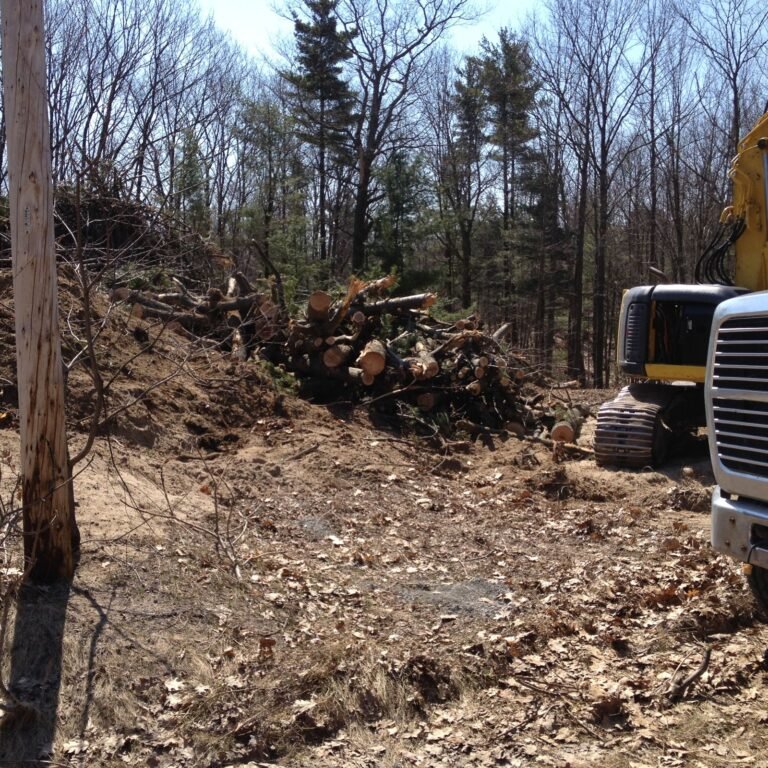
The cheapest load of soil is the one that never leaves your lot. Before the first bucket goes in, we plan the stockpiles so as much as possible goes back into the job.
- Strip and save topsoil. Keep it in its own pile, away from traffic. It goes back on top at final grade.
- Stockpile clean native fill for backfill. Sand from a Tiny or Wasaga dig often makes good backfill. Wet clay may not.
- Use the rest to shape the lot. Raising the house grade a little, building up a low corner, or a berm can soak up spare soil, as long as it does not push water onto a neighbour.
- Haul out only the true surplus. Stones, roots, and soil that has nowhere to go on your lot.
Every load you truck out and buy back costs you twice: once to haul and once to import. On a typical lot that can be thousands of dollars.
Your Town’s Fill By-law Still Applies
Many townships have their own site alteration or fill by-law that sits on top of the provincial rule. Volumes, exemptions and fees differ a lot. A few local examples we checked:
| Town | What the by-law says (2026) |
|---|---|
| Springwater | By-law 2022-105: a fill permit is needed to place or dump fill. Work under a building permit is exempt within 3.0 m of the building footprint, with excess soil kept on site. Lawn dressing exemption is limited to 200 mm of raise and 300 cubic metres a year. Fines run $500 to $100,000. |
| Clearview | By-law 25-67: small amounts allowed without a permit, based on lot size and capped at about 100 cubic metres in total. Bigger jobs need a Small or Large permit. Building approvals can cover minor and small work. |
| Severn | By-law 2024-67: permit needed for more than 10 truckloads (100 cubic metres). Residential fee $400.14 plus HST, $4,000 minimum deposit. |
| Tiny | We could not confirm a current Township fill by-law. Check with Tiny before importing or moving large amounts of fill. |
| Wasaga, Collingwood | Check with the town, and remember the NVCA regulates fill in its regulated areas (see our NVCA permit guide). |
Rule of thumb: if you are bringing in more than a few loads that is not tied to your building permit, call the town first. It is a five-minute phone call against a fine with a lot of zeros.
Bringing Fill In Without Bringing In Trouble
Clean fill
For raising grade and backfill. Ask where it came from. Free fill from a stranger’s dump truck can hide concrete, asphalt, garbage or worse, and once it is spread on your lot it is your problem.
Septic sand
A raised or filter bed needs sand that meets the designer’s spec. Ask the pit for a recent sieve analysis on the exact product and give it to the designer. Wrong sand can fail an inspection.
Granular A and B
For driveways and pads, not for lawns. Crushed stone that packs hard. See our gravel driveway cost guide.
| Material, delivered | Rough range (2026), per tri-axle load |
|---|---|
| Clean fill | $250 – $600 |
| Septic sand (to designer spec) | $450 – $900 |
| Screened topsoil | $500 – $1,000 |
| Haul-away of surplus soil | $300 – $800+ |
Haul distance is the big mover, followed by product and whether the receiving site charges a fee. Septic design is done through SepticReplacement.ca by a BCIN-qualified designer. We do not design septic systems.
Request a Ballpark on Your Dig and Fill
Tell us the house footprint and lot, and we will plan the stockpiles so you haul out less and buy back less.
Related guides
Frequently Asked Questions
Do homeowners have to follow O.Reg 406/19?
Projects with less than 100 cubic metres of excess soil are generally exempt from most requirements, including the registry filing. The owner is still responsible for making sure soil is not contaminated and goes somewhere legal.
How many truckloads is 100 cubic metres?
Roughly 10 tri-axle loads. A full basement dig can easily produce more than that, which is why keeping soil on site matters.
Can I take clean soil to the landfill?
Starting January 1, 2027, landfills will generally be barred from accepting clean excess soil, with a few exceptions. Plan on reusing it or sending it to a proper reuse site.
Do I need a permit to bring fill onto my property?
Often yes. Many townships, including Springwater, Clearview and Severn, have fill or site alteration by-laws with their own thresholds. Check with your town before importing fill.
What should I do with dirt from my basement dig?
Keep topsoil separate, stockpile clean fill for backfill and grading, and haul out only the true surplus. Hauling out and buying back the same volume costs you twice.
What is a sieve analysis for septic sand?
A lab test showing the grain sizes in a sand product. The septic designer uses it to confirm the sand meets the bed specification before it goes in.
How much does a load of fill cost?
A rough 2026 range is $250 to $600 per tri-axle load of clean fill delivered, more for septic sand or topsoil. Distance from the pit is the biggest factor.