The site work division of ICFHome.ca · Building since 1979 · Insured to $2,000,000 · 705-533-1633

Excavation2026Tay, Midland, Penetanguishene, Tiny, Wasaga
Building on Rock or a Wet Lot Near Georgian Bay
Yes, you can build on shallow bedrock or a high water table, but budget for it: rock breaking can add $10,000 to $40,000 or more to a dig, and a wet lot usually means pumping, a raised septic bed and imported fill. Here is how each problem gets handled and what it does to your cost.
Updated October 2026 · Georgian Bay Siteworks, the site work division of ICFHome.ca
Insured to $2,000,000Site work division of ICFHome.caBuilding since 1979250+ projects in Simcoe County
Know Which Problem You Have First
Our area has two very different kinds of hard lot. In Tay, Midland, Penetanguishene and up toward Port Severn you are on the edge of the Canadian Shield, and bedrock can sit a foot or two under the moss. Along the beaches of Tiny and Wasaga it is the opposite: deep sand with a high water table close to the Bay.
Some lots manage both, with rock on one side and a wet hollow on the other. That is why we always want test holes before anyone draws a house. A few hours with a machine is cheap insurance against designing a basement that belongs on a different lot.
Builder truth: the lot with the nicest rock outcrop and the best view is often the most expensive lot to put a basement on. The view is still worth it. Just know the number.
Rock: Breaking It or Blasting It
Hydraulic breaker
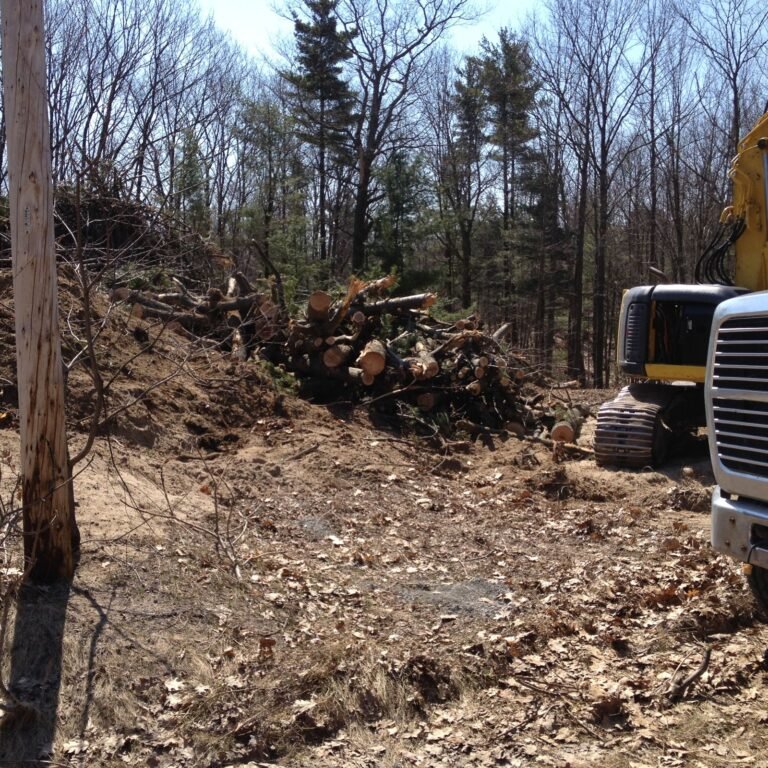
A big hammer on the excavator chips rock away a bucket at a time. Slow and loud, but no explosives, no blasting permits, and good control near wells and neighbours. Fine for a few feet of rock or a trench.
Blasting
Done by a specialist blasting contractor, not by us. Moves a lot of rock fast. Comes with notices, vibration monitoring and pre-blast surveys of nearby buildings and wells.
Build up instead of down
Often the smartest move. Set the house higher, use a shallower foundation or a walkout, and bring in fill. Less rock removed is less money spent.
Blasting in Ontario municipalities commonly follows the provincial specification OPSS.MUNI 120. Under it, as one township explains, pre-blast inspections must be offered to properties within 75 m for holes under 5 m deep, and within 150 m for deeper holes. Local noise by-laws also limit blasting hours. Requirements vary by town, so the blasting contractor and your building department need to agree on the plan before any drilling starts.
One piece of good news: the building code table for minimum foundation depth sets no minimum depth for footings on sound rock (see a published Canadian edition of Table 9.12.2.2). Frost does not heave solid rock. Your designer and building inspector still have the final say on how the footing is pinned and drained.
Wet Lots and High Water Near the Bay
Sand near the Bay drains well right up until you dig into the water table, and then the hole fills like a bathtub. The fixes are not exotic, but each one costs money.
- Dewatering during the dig. Pumps and sometimes well points keep the hole dry long enough to pour footings. Ontario generally requires a registration or permit for construction water takings over 50,000 litres per day. Most house digs stay under that, but a really wet hole can get close.
- Raise the grade. Set the footing higher and bring in fill so the basement floor sits above the seasonal high water. Usually the cheapest long-term answer.
- Sump and perimeter drain. Weeping tile to a sump pit with a reliable pump, plus a backup. Mandatory thinking on a wet lot, not an upgrade.
- Surface drainage. Swales and grading that carry rain away from the house instead of feeding the water table right beside your walls.
- Consider no basement. A slab or crawlspace may make more sense than fighting water forever.
Your Septic Bed Takes the Hit Too
Rock and high water both leave too little natural soil under a septic bed, so these lots usually end up with a raised bed built on imported sand. Our 2026 ranges from SepticReplacement.ca: conventional $25,000 to $40,000, raised bed $30,000 to $50,000, advanced or tertiary $35,000 to $65,000 and up.
We do not design septic systems. Design is done by a BCIN-qualified designer through SepticReplacement.ca, and we build what the permit says. For more, read septic on sand and high water tables, or try the free septic check.
How Rock and Water Change the Budget
| Item | Rough range (2026) | What moves it |
|---|---|---|
| Test holes before design | $500 – $1,500 | Number of holes, travel, access |
| Rock breaking on a basement | $10,000 – $40,000+ | Depth of rock, hardness, machine size |
| Pumping during a wet dig | $1,000 – $6,000 | How fast water comes in, weeks the hole is open |
| Imported fill to raise grade | $250 – $600 per tri-axle load | Fill type and haul distance |
| Raised septic instead of conventional | About $5,000 – $10,000 more | Comparing the low ends of the two ranges above |
None of these are reasons to walk away from a good lot. They are reasons to dig test holes, get a written price with rock and water unit rates, and keep a contingency. If you are still deciding on a lot, run through the is this lot buildable checklist first.
Is My Lot Buildable? Let Us Dig and Find Out
We will dig test holes, tell you what is down there in plain English, and price the rock or water work before you commit to a design.
Related guides
Frequently Asked Questions
How much does hitting rock add to a basement dig?
Breaking rock with a hydraulic hammer can add roughly $10,000 to $40,000 or more depending on how much rock there is and how hard it is. Test holes before design tell you which end of that range you are in.
Do I need a permit to blast rock for a house?
Blasting is done by a licensed specialist and is controlled by provincial specifications and local by-laws, including notices and pre-blast surveys. Check with your town building department before planning on it.
What is a pre-blast survey?
An inspector documents the condition of nearby buildings and wells before blasting so any later damage claim can be checked. Under OPSS.MUNI 120 it is offered within 75 m for shallow holes and 150 m for holes over 5 m deep.
Do footings on bedrock need to go below frost depth?
The code table sets no minimum depth for footings on sound rock because rock does not heave. Your designer and inspector still decide how the footing is anchored and drained.
Can I build a basement on a lot with a high water table?
Often yes, by raising the grade with fill, installing a perimeter drain and sump, and pumping during the dig. On very wet lots a slab or crawlspace can be the better choice.
Will a wet or rocky lot need a raised septic bed?
Usually. When there is not enough natural soil above rock or water, the designer specifies a raised bed on imported sand, which runs about $30,000 to $50,000 in 2026.