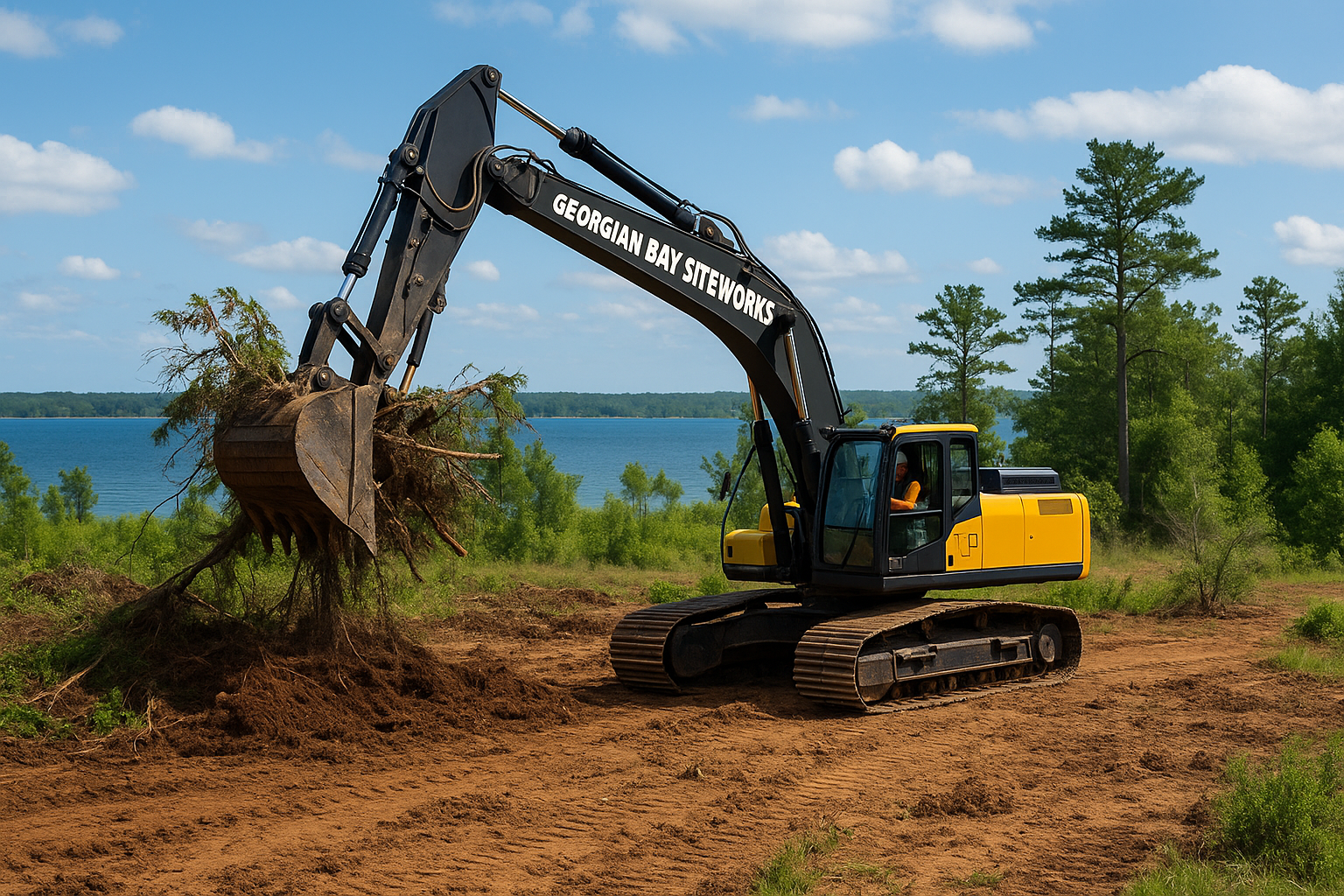
Stump Removal Georgian Bay: The Ugly Leftover That Wrecks More Site Plans Than People Expect
A stump is easy to ignore when you are standing on an empty lot imagining the finished project. It is a lot harder to ignore when it is sitting under a driveway base, buried in a building pad, interfering with a septic area, or rotting under fill that later settles where nobody wanted movement. This page is about why stump removal matters more than most people think and why clearing properly the first time saves money later.
People tend to judge lot clearing by what they can see from eye level. If the trees are down, the brush is pushed, and the site looks more open, the job feels done. But on many Georgian Bay properties, the real trouble is not what is standing. It is what got left behind.
That is where stumps become a problem. Not because they are ugly, although they usually are. The real issue is that stumps, roots, and buried organic material can quietly undermine the next stage of the project. A driveway that dips later. A building pad with settlement. A septic-related area that should have been cleaner. A future excavation that turns into a root-filled wrestling match because nobody removed the junk properly when the site was first opened.
Stump removal is one of those jobs that looks like a small add-on until you compare the cost of doing it right now versus the cost of discovering later that the ground under something important still contains old wood, roots, and organic material. That is not a fun discovery. It is usually an expensive one.
Why a stump is more than just a stump
On a treed lot, a stump is really the visible top of a buried problem. The trunk may be gone, but the root system, decaying wood, disturbed soil, and leftover organics are still part of the site. If that material sits in the wrong place, it can cause settlement, soft spots, poor compaction, awkward excavation, and a lot of frustration for the people trying to build something properly on top of it.
This matters most in the areas that need stable, predictable ground. Think building pads, driveway routes, utility corridors, and any place that will carry fill, compaction, drainage work, or future structures. If buried wood is left there because “it will rot eventually,” that is exactly the problem. It will rot eventually. And the ground above it will not thank you for that later.
Building pads and foundation areas are no place for buried organics
When a house, garage, shop, or garden suite is going on a lot, the goal is stable support. That means the building area should not be sitting over root balls, buried trunks, old stump pockets, or organic mess that will break down over time. A clean building pad is not just nice to have. It is part of doing the site work properly.
Ontario’s building-code materials explicitly treat the removal of topsoil and organic matter as part of proper site and sewage-system knowledge, which lines up with what builders and excavators see in the field every day: organic material is not what you want under the parts of a project that need dependable support. That is why stump removal connects directly to the bigger construction process, not just the clearing phase.
If the lot is being prepared for a new build, it helps to understand the whole sequence, which is why this topic overlaps with site preparation before building, broader excavation services, and the overall planning side of zoning rules for new homes in Ontario.
In plain English, if the site is supposed to hold something valuable, it is a poor place to leave decaying wood in the ground and hope for the best.
Driveways and private roads suffer when stumps are ignored
Driveways are one of the most common places people underestimate stump removal. The lot gets cleared, the route looks open, some of the obvious stump tops are cut low, and the driveway base starts going in. It feels efficient. Then months or years later, the base settles, a soft pocket forms, or the route does not perform the way it should. Often the buried leftovers are part of that story.
What people see
The tree is gone, the path looks open, and the driveway seems ready for gravel and traffic.
What the driveway sees
Buried roots, organic pockets, uneven subgrade, and a future invitation to settlement where the base needs stability.
This is why stump removal matters on access roads and long rural driveways just as much as it does in building zones. If the route is supposed to support trucks, equipment, snow clearing, and years of use, leaving decaying material under it is not a clever shortcut. It is just a delay tactic for a future repair bill.
That is also why this page connects to driveways and private roads in Georgian Bay. A good driveway starts with what is under it, not just what gets spread over top.
Septic beds and septic-related areas are another place where “good enough” is not good enough
On rural properties, stump removal can matter a lot around septic-related work. The exact septic layout and requirements depend on the design, soils, and approvals, but the broader lesson is simple: places that depend on stable, properly prepared ground do not benefit from buried root balls and rotting wood. Those leftovers can interfere with excavation, fill quality, grading logic, and future site performance.
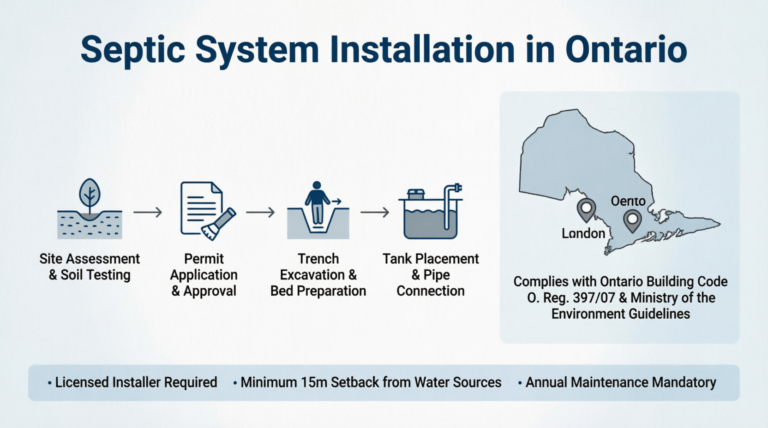
Ontario confirms that most rural on-site sewage systems fall under the Ontario Building Code, which is one more reason site preparation in and around septic work should be taken seriously. The cleaner the area is from the start, the less likely you are to fight buried organics later when the project needs predictable ground conditions.
For the broader service side, this topic ties into septic systems in Georgian Bay. Stump removal is not the septic system, of course, but it can absolutely affect whether the surrounding site work starts cleanly or starts compromised.
Buried wood causes settlement later, which is exactly why it should not be ignored now
One of the biggest reasons stump removal matters is settlement. Organic material does not stay stable the way properly prepared mineral soil and suitable fill do. It breaks down. It shrinks. It leaves voids. It changes over time. That is not the kind of behavior you want under a building pad, a driveway base, or a heavily used site area.
Settlement is especially frustrating because it often shows up after the work that covered the problem is long finished. By then the site looks done, the fill is in, the gravel is spread, or the structure is already there. Now the cost of fixing it is much bigger than the cost of removing the stump properly at the start would have been.
Cheap now
Leave the stump, bury the roots, cover the problem, and enjoy the short-term savings.
Expensive later
Repair settlement, rework the base, re-excavate the area, or explain why the “finished” site is moving where it should not.
That is not a hard choice, at least not when the project is being thought through properly.
Clearing properly the first time usually costs less than clearing twice
There is a big difference between dropping trees and actually finishing the clearing. Proper stump removal often means the site is truly ready for the next stage, instead of only looking ready from a distance. That matters on building lots, future garden-suite areas, driveway corridors, and anywhere else the property is supposed to support real use.
This is why stump removal should be seen as part of the broader lot clearing process, not as some optional cosmetic extra. If you are trying to budget site work properly, it also belongs in the cost conversation, which is why this page naturally links to lot clearing cost in Georgian Bay.
The same logic applies to the broader build budget too. Site work surprises have a way of creeping into the overall project cost, which is why it is smart to think about them early alongside the bigger picture of what it costs to build a house in Ontario.
Stump removal is even more important on lots with future plans
Many Georgian Bay properties develop in phases. Maybe the first step is access and site opening. Then the main house. Later a detached garage, workshop, or garden suite. On those kinds of lots, sloppy stump removal can come back to haunt future phases. The area that looked “good enough for now” becomes the exact place that needs clean excavation later.
If there is any chance the property will evolve, it usually makes sense to remove the buried problems when the site is already open and equipment is already there. That is especially true where future pads, service runs, and access routes may be involved.
That is why this topic also connects to long-term property planning through pages like Garden Suite Builder Simcoe County and Build With Us. Stump removal may not sound glamorous, but it is the kind of early site decision that either helps the future plan or quietly sabotages it.
What good stump removal actually looks like
Good stump removal is not just knocking the visible stump loose and calling it a day. It means thinking about where the stump sits, what the area will be used for, how much root material matters there, how the ground will be restored, and what the next trade needs from that part of the site.
In practical terms, that usually means asking:
- Is this in a future building, driveway, or septic-related area?
- Will the remaining roots interfere with excavation or compaction?
- Does the site need clean fill and a stable base here?
- Where will the debris go once removed?
- Will the ground need reworking after the stump comes out so the site is actually ready for the next step?
Those questions are what separate real site preparation from just making the lot look less wooded.
The common stump-removal mistakes that create later headaches
| Mistake | What happens next | Why it hurts |
|---|---|---|
| Cutting the stump flush and leaving the rest | The site looks cleaner but the underground problem is still there. | You get the illusion of progress without the benefit of actual preparation. |
| Burying stumps and roots in fill areas | The organics decay over time and settlement risk remains. | The trouble shows up later, when the fix is far more disruptive. |
| Ignoring stump removal under driveways | Soft spots and movement can develop in the route. | Driveways need support, not hidden organic pockets. |
| Leaving root systems in future build areas | Excavation, compaction, or base prep gets harder later. | You end up paying twice for work that should have been done once. |
| Treating stump removal as cosmetic only | The clearing looks finished but the site is not actually ready. | Appearance and readiness are not the same thing. |
Why this matters so much in Georgian Bay
Georgian Bay lots are often treed, irregular, rural, and full of character. That is a polite way of saying they are beautiful and can also be awkward. Big trees, root systems, uneven terrain, long driveway routes, future septic areas, and phased site development all make stump removal more important than it would be on a flat bare lot.
That is why a local, site-prep mindset matters. The goal is not just to make the lot look cleared. The goal is to make the lot ready. Those are different outcomes. One photographs well. The other actually supports the project without creating hidden problems under the ground.
That is also where the broader planning framework matters. Site decisions live inside the bigger context of approvals, layout, and build sequencing, which is why pages like the Ontario Building Code and zoning/planning resources matter in the background, even for something as humble as stump removal. Small ground mistakes have a habit of becoming large project mistakes later.
Need the lot cleared properly, not just cosmetically?
Remove the buried leftovers before they end up under a driveway, building pad, or future site feature that needs stable support. Good stump removal is not about tidiness. It is about not planting problems under the project.
Frequently Asked Questions
Why is stump removal such a big deal on building lots?
Because stumps are not just visible wood above grade. They also come with buried roots, disturbed soil, and organic material that can create settlement, soft spots, and messy excavation later. If the area is going to support a building pad, driveway, septic-related work, or fill, leaving that material in place is often a bad long-term decision.
Is cutting a stump flush with the ground enough?
Sometimes it may improve appearance, but it does not solve the underground issue in areas that need stable, clean support. For real site preparation, especially in future building or driveway zones, the underground portion is often the part that matters most.
Can buried stumps really cause settlement later?
Yes, that is one of the main reasons stump removal matters. Buried organic material breaks down over time, and that change in volume can affect the ground above it. If the area carries a driveway, fill, or structure-related load, that is not the kind of hidden condition you want.
Do stumps matter in septic-related areas too?
They can, yes. Septic-related site work depends on good preparation and a sensible layout. Buried roots, wood, and rough leftover organics are not helpful in areas where the ground should be prepared carefully and predictably. Clean site work usually leads to cleaner outcomes later.
Why does stump removal matter so much on Georgian Bay lots?
Because many properties in the region are wooded, rural, and developed in phases. The lot may need a driveway, a house, septic work, utilities, or future secondary structures. A stump left in the wrong place can interfere with any of those later, especially once the site is partly finished and harder to disturb again.
Should stump removal happen during the initial lot clearing?
Usually that is the smartest time to deal with it, especially in important site areas. The equipment is already on site, access is usually better, and the project is less likely to be boxed in by later work. It is generally cheaper to remove the problem early than to rediscover it after more of the site is finished.
What areas of a property matter most for stump removal?
The most important places are future building pads, driveway routes, service corridors, septic-related areas, and any zone that will need fill, compaction, or stable finished grades. Those are the areas where buried organics tend to cause the most practical trouble later.
Can leftover roots interfere with excavation later?
Absolutely. Root systems can make future excavation messier, slower, and more expensive. Even if the stump itself is no longer obvious, the root mass can still affect digging, base preparation, and the overall ease of getting the site ready for the next stage.
How does stump removal connect to overall site costs?
It is part of doing the job once instead of twice. The cost of proper removal during clearing is often much smaller than the cost of fixing settlement, re-excavating a problem area, or disturbing finished work later because buried wood was left where it should not have been.
What is the biggest mistake people make with stumps?
The biggest mistake is treating them like a cosmetic issue instead of a site-preparation issue. If the lot only has to look better, you can get away with very little. If the lot has to support a real project properly, the underground leftovers matter a lot more than people first assume.