Before You Build the House, You Have to Build the Site Plan That Keeps the Whole Job Sane
A lot can look perfect from the road and still be completely unready to build on. In Simcoe County, the expensive surprises usually happen before the foundation ever starts: poor access, wet areas, septic conflicts, bad drainage, steep entrances, and clearing done in the wrong place. This page walks you through what should happen first, in what order, and why rushing this stage is how “easy lots” become expensive ones.
You do not usually lose money on a building project because of one dramatic disaster. More often, you lose it in small, annoying ways right at the beginning. The driveway entrance is wrong. The clearing went too far. The septic area got boxed in. The excavation spoiled the drainage pattern. Then everybody starts “fixing” things, and suddenly the site prep bill looks like it had a few drinks and made poor decisions.
That is why site preparation matters so much. It is not just about getting the lot ready for a house. It is about making sure the lot, the house, the septic system, the access, the drainage, and the grading all work together before real construction dollars start flying out the door.
A lot of people treat this stage like a warm-up act. It is not. In many ways, it is the stage that decides whether the rest of the build flows smoothly or feels like a long argument with mud, water, and invoices.
Start with the legal and practical layout, not the excavator
Before the first tree comes down or the first bucket goes in the ground, you want to know what the lot can legally and practically support. That means setbacks, permitted use, building envelope, driveway location, septic feasibility, drainage direction, and how the site will actually function during construction.
The big mistake is designing the house first and assuming the rest will sort itself out. Sometimes it does. Often, it does not. A beautiful footprint on paper can create a lousy septic layout, awkward grading, a terrible entrance, or a driveway that works great in August and turns into a spring mud festival in April.
That is why the first step should be lot review, zoning review, and practical siting. If you are working through the planning side first, these pages help frame the big picture: Zoning Rules for New Homes in Ontario and How to Obtain a Building Permit in Ontario.
Clearing is not just removal. It is controlled site preparation.
People hear “lot clearing” and picture one machine, a pile of brush, and a clean slate. Real site prep is more deliberate than that. The goal is not to strip the lot bare. The goal is to open the build area, protect what should stay, and create workable access without damaging the parts of the property you still need later.
What smart clearing does
Opens the house area, preserves useful privacy, protects roots where it matters, and gives equipment room to move safely.
What sloppy clearing does
Removes the wrong trees, disturbs too much soil, chews up the future yard, and makes grading and drainage harder afterward.
A homeowner we worked with wanted to “keep it natural,” which sounded good until we looked at how the access had to work, where the septic area needed to be, and which trees actually gave the lot its privacy. Once the clearing was marked properly, the site started making sense. Before that, it was just a nice piece of land waiting to become an expensive puzzle.
If clearing is part of your pre-build scope, this related page ties into the bigger process: Lot Clearing Georgian Bay.
Access and the driveway entrance matter earlier than most people think
Machines, gravel trucks, concrete trucks, truss deliveries, framing packages, septic materials, dumpsters—none of these items arrive by magic. If the entrance is awkward, too soft, too steep, or poorly located, the site gets harder and more expensive to manage from day one.
A good pre-build access plan asks a few very practical questions:
- Where should the entrance go for sightlines, turning, and grade?
- Will a culvert be needed, and if so, what does the municipality require?
- Can trucks get in and out without destroying the shoulder or the route?
- Will the temporary construction access also serve the final driveway layout?
- How does runoff move across or beside that access route?
This is why driveway planning belongs in the site-prep conversation, not in the “we’ll figure it out later” pile. For that piece of the job, see Driveways and Private Roads Georgian Bay.
Drainage and grading should be part of the first conversation, not the last one
Water is patient. That is what makes it so annoying. It does not care what the rendering looked like, how excited the owner is, or how rushed the schedule feels. If the site handles water poorly before construction starts, it usually handles it even worse once the lot gets disturbed.
That is why grading and drainage need to be considered right up front. You need to know where surface water goes now, where it should go later, and whether the house, driveway, septic area, and yard can all be graded in a way that makes sense.
Questions worth asking early
Does the lot hold water? Is the proposed house elevation realistic? Will the driveway act like a channel or a dam? Where will runoff go after big rain?
Questions people ask too late
Why is the excavation wet? Why is the yard trapped? Why is the entrance washing out? Why does everything look fine on paper but soggy in real life?
For the broader drainage side of the conversation, see Grading and Drainage Georgian Bay.
Septic planning needs a seat at the table from day one
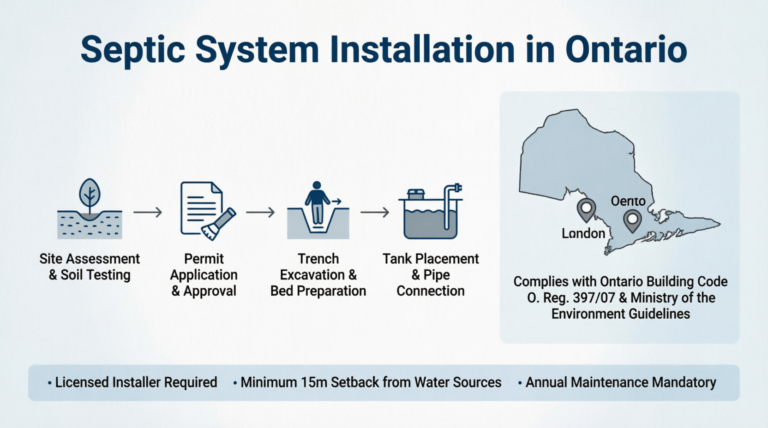
On many Simcoe County lots, the site is not just carrying a house. It is also carrying a septic system. That changes everything. House placement, driveway route, grading strategy, usable yard area, well location, and future service access all depend on how the septic system fits into the plan.
The mistake homeowners make is treating septic like a leftover detail. It is not. It is one of the major layout drivers on the lot. If you leave that decision too late, you often end up forcing the house or driveway into awkward positions, or compromising the yard and grading more than you should have.
These related pages help with that side of the project: Septic Systems Georgian Bay and Septic Systems Ontario.
The order of operations matters more than people think
A lot of expensive site-prep problems are not caused by bad intentions. They are caused by bad sequence. Work gets done in the wrong order, and suddenly one trade undoes another. The entrance gets built without enough thought. The clearing ignores the septic area. The excavation spoils the drainage plan. Then the site starts running on rework.
For most pre-build projects, the logic should look something like this:
- Review zoning, permit path, and practical house placement.
- Confirm the rough site layout for house, septic, access, and drainage.
- Mark clearing limits and preserve what should stay.
- Create or improve the entrance and rough access route.
- Coordinate drainage and grading before major excavation.
- Confirm septic location and keep it protected during site work.
- Excavate with a spoil and movement plan, not just a hole-in-the-ground mentality.
- Rough grade and stabilize the site so the next trades are working with the site instead of fighting it.
That sounds obvious, but the number of projects that skip, shuffle, or rush those steps would make you wonder whether common sense needs its own permit application.
What excavation should actually accomplish at this stage
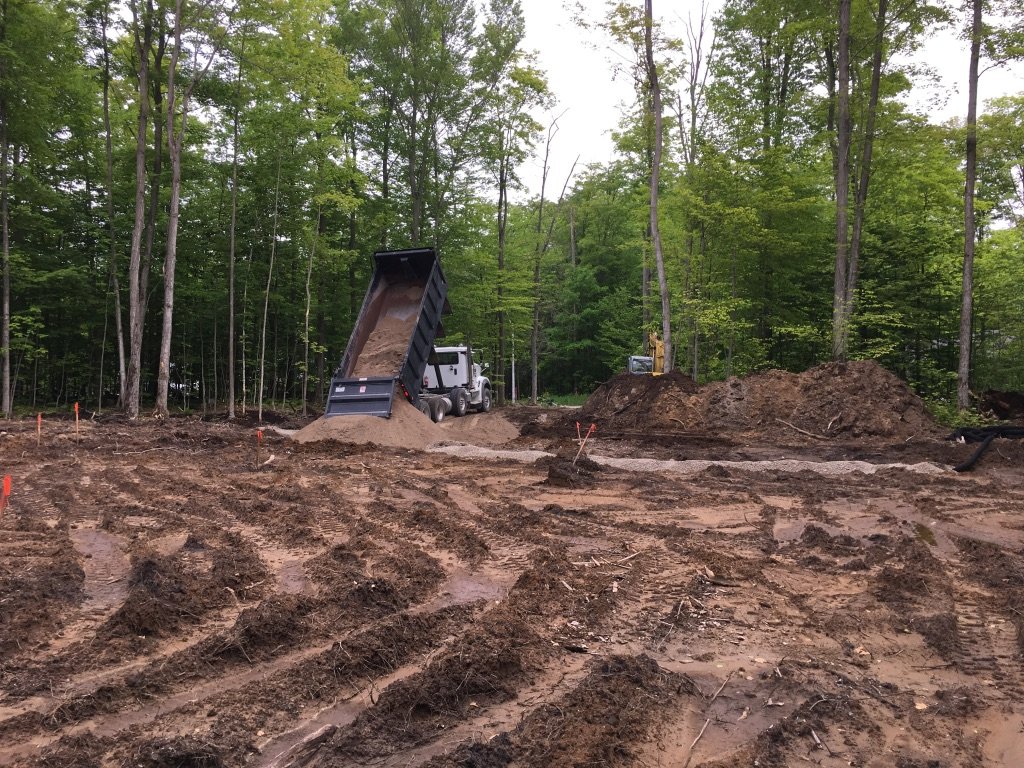
Excavation is not just about digging the foundation area. It is part of the whole site-prep system. The excavation has to support the next stages of the project, not create new headaches for them.
That means thinking through:
- where excavated material will go,
- whether any of it can be reused,
- how trucks and equipment will keep moving around the site,
- how wet conditions will be managed, and
- how the excavation affects the final grading strategy.
For a broader service overview, see Excavation Services Georgian Bay. Good excavation makes the next phase easier. Bad excavation turns the property into a messy obstacle course and then dares everyone else to work around it.
The common mistakes that turn a simple start into an expensive one
| Mistake | What happens next | Why it hurts |
|---|---|---|
| Designing the house before understanding the lot | Setbacks, septic, grades, or access start fighting the design. | You end up redrawing things after spending time and money getting attached to them. |
| Clearing too much too soon | The lot loses privacy, windbreaks, and useful edges. | You cannot glue mature trees back on later. |
| No entrance or access strategy | Deliveries become awkward, rutting gets worse, and the site stays messy. | Wasted machine time is expensive time. |
| Ignoring drainage early | Water gets trapped, excavation becomes messy, and rough grades work against you. | Water problems usually get costlier after disturbance, not cheaper. |
| Treating septic like a leftover detail | The lot gets cramped and future maintenance or grading gets awkward. | Septic is a layout driver, not a leftover corner decision. |
| Doing the work out of sequence | One trade undoes another trade’s work. | That is the construction version of paying twice for the same sandwich. |
What a smarter start looks like in real life
The projects that start well usually have one thing in common: the owner respects the site before trying to force the site to respect the schedule. That means looking at the lot as a working system instead of just a place where a house will sit.
A smarter start usually means:
- house placement is coordinated with septic, grading, and driveway logic,
- clearing is deliberate, not reckless,
- access is set up for real equipment and real weather,
- drainage is considered before the ground gets disturbed, and
- the work happens in an order that keeps the site getting cleaner instead of more chaotic.
That does not just make the site prep smoother. It makes the whole build calmer. Less chaos. Less rework. Fewer surprises. Better decisions. That is not flashy, but it is exactly what saves money.
If your project is still in the planning stage and you want the bigger house-and-site process in one place, Build With Us is a helpful next step.
Planning to build in Simcoe County?
Get the pre-build work sorted in the right order before the first shovel turns a small oversight into a large invoice. Good site preparation is not glamorous, but it is the part that makes the rest of the project possible.
Frequently Asked Questions
What is included in site preparation before building?
Site preparation usually includes some combination of lot clearing, driveway entrance work, rough access, drainage planning, septic coordination, excavation, grading, and stabilization. The exact scope depends on the property, but the big goal stays the same: make the lot workable and predictable before the real building work begins.
Should septic planning happen before excavation?
Yes. On rural and privately serviced lots, septic planning should be part of the early layout discussion. House placement, grading, driveway routing, and usable yard area are all affected by where the septic system goes. Leaving that decision too late can back the whole project into a corner.
Why is the driveway entrance part of site prep?
Because the site has to work during construction, not just after it. Trucks, machines, and material deliveries need safe and practical access. A poorly planned entrance causes delays, rutting, soft spots, and needless repair work before the real driveway is even built.
Can lot clearing be done later once the build gets underway?
It can, but that is not usually the smartest way to do it. Selective clearing tied to the site plan helps preserve privacy, reduce unnecessary disturbance, and keep the lot more organized. Random clearing during construction often removes the wrong things and creates more mess than progress.
How early should drainage be considered?
Very early. Drainage should be part of the first round of site planning, because it affects house elevation, grading, driveway layout, excavation conditions, and the finished property. Water problems rarely improve by being ignored.
What is the most common pre-build mistake?
The most common mistake is treating the lot as if it will sort itself out once equipment arrives. It will not. Good site preparation depends on planning the house, access, septic, and water management together instead of letting each trade discover problems in real time.
Does every Simcoe County lot need the same site-prep process?
No. The basic categories are similar, but the level of work depends on the land. A flat, open lot behaves very differently from a wooded lot with slope, soft ground, rock, or private servicing. Good site prep responds to the actual site instead of forcing the same routine everywhere.
Why does zoning matter before site prep starts?
Zoning matters because it shapes what can go where. The house location, setbacks, lot coverage, driveway placement, and even some servicing decisions depend on those rules. It is much easier to shape the site around the real rules than to clear, grade, and design first and then discover the lot cannot support the plan properly.
How do I know if my lot is really ready to build on?
A lot is ready when the layout, access, drainage approach, septic plan, and excavation strategy all make sense together. If those pieces are still vague, the lot may be buildable in theory, but it is not truly ready in practice.
Where should I start if I am still at the early planning stage?
Start with the lot review and overall site logic. Figure out where the house should sit, how access will work, whether the driveway and grading make sense, and how septic and drainage fit into the same plan. Getting those answers early will save more money than trying to fix them later with equipment already on site.