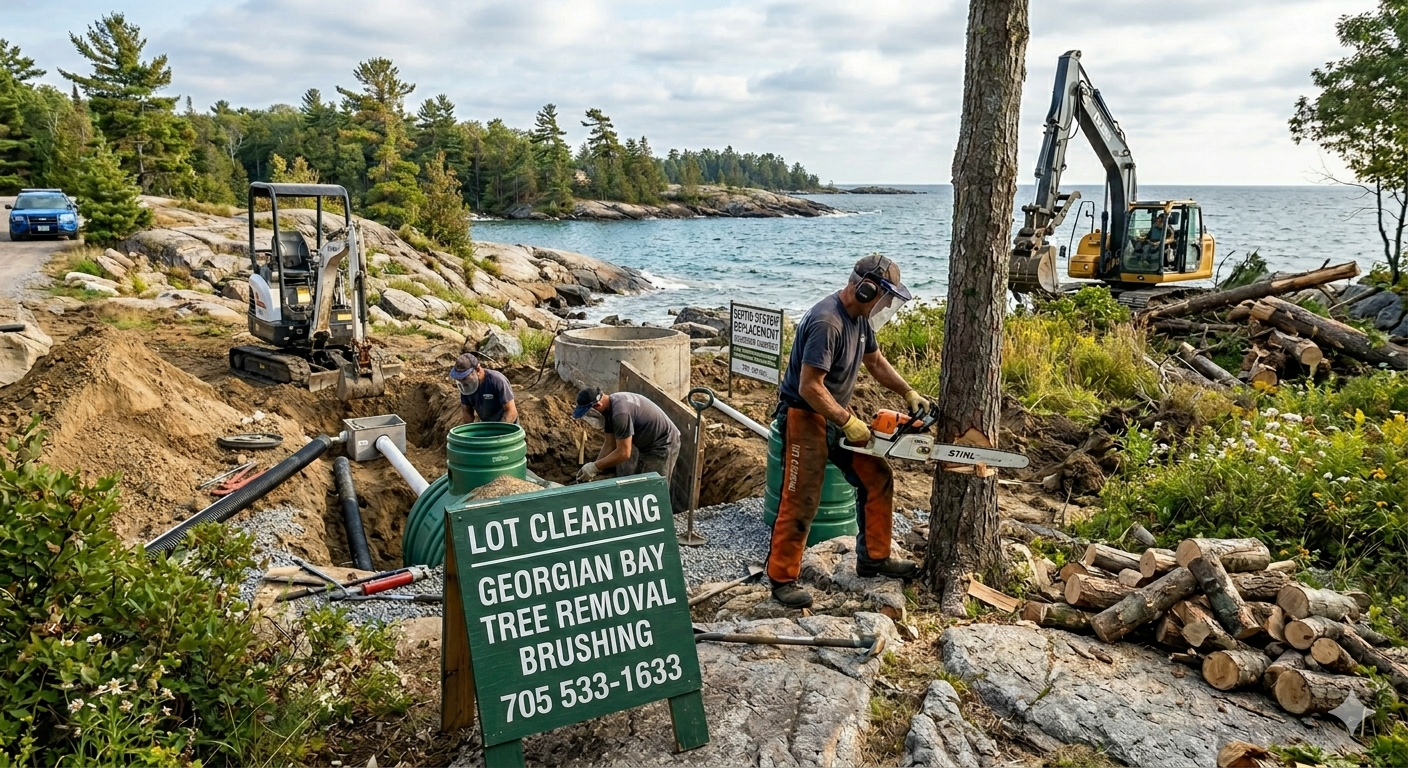
Lot Clearing Georgian Bay: Trees, Brush, Access, Milling, and Getting a Build Site Ready
Lot clearing sounds simple until you stand on the property and realize half the “lot” is brush, the driveway exists only in your imagination, three mature trees are exactly where the septic should go, and the nice flat area is not actually flat. Around Georgian Bay, lot clearing is rarely just about cutting trees. It is about opening up a site properly, protecting what should stay, removing what should go, and setting the property up so the next stage of the build does not begin with a mess.
Good lot clearing is not “clear everything and hope for the best”
A lot of people imagine lot clearing as one machine, one chainsaw, and one very long day. Real site clearing is more thoughtful than that. The goal is not to make the property bare. The goal is to make the property buildable, accessible, and practical while keeping the good parts of the lot working in your favour.
Around Georgian Bay, that matters. Many lots are wooded, uneven, rocky, or tight. Some have steep approaches. Some are soft in spring. Some have mature trees worth saving. Some have plenty of timber, but only if it is handled properly. On one lot you are opening up a cottage site and a driveway. On another, you are clearing a house area, septic field, staging space, and turning area for trucks. Same phrase, very different job.
What this page helps you figure out
- What needs to be cleared for a home, cottage, septic area, or driveway.
- Why brush, stumps, and access roads matter as much as tree cutting.
- How selective clearing protects the lot instead of ruining it.
- When usable timber can be milled instead of wasted.
- Why lot clearing should be tied to the entire build plan from day one.
If you are trying to understand the whole project, not just the clearing portion, start with our services page. And if you want the broad Ontario cost picture for the build that usually follows, this guide on cost to build a house in Ontario helps frame the bigger budget conversation.
Most lots need to be opened up in stages, not bulldozed in one mood swing
The best lot clearing jobs usually happen in a sequence. First you decide what has to fit on the property. Then you decide what needs to be removed to make that happen. Then you decide what should be left alone.
Areas that often need clearing
House footprint, garage pad, septic area, driveway or private road, hydro access, well access, machine routes, material staging, and enough room for excavation and backfilling without every operator playing a precision parking game in the woods.
Areas often worth preserving
Good mature trees, privacy buffers, windbreaks, stable root zones, natural drainage patterns, and sections of the lot that give the property character instead of making it look like a shopping centre parking expansion gone wrong.
This is where homeowners can save themselves a lot of grief. If you clear too little, the site becomes awkward and expensive to work on. If you clear too much, you lose privacy, shade, wind protection, and sometimes the best visual features on the lot. The sweet spot is selective clearing with the finished project in mind.
If the lot is heading toward a full house build, the clearing plan should connect to the foundation and excavation plan from the start. That is especially true when the project includes basement work or difficult grading. For that side of the project, see ICF foundation contractor Ontario and our local guide to excavation services in Georgian Bay.
Clearing the lot properly means dealing with what is above ground and what is waiting below it
Cutting brush is the easy part to describe and often the first thing people notice. But brush is only one layer of the job. Real clearing usually involves trees, undergrowth, slash cleanup, stump removal, root issues, and deciding what happens to the material afterward.
Here is where jobs usually get more involved than homeowners expect:
- Brush and undergrowth: This opens the site visually and creates access, but it also reveals what is really there.
- Tree removal: Some trees need to go for the house, the septic area, or the driveway. Others should stay for privacy, shade, or stability.
- Stumps: A stump left in the wrong place is not a harmless little woodland souvenir. It becomes a problem for grading, excavation, foundations, lawns, and future settlement.
- Root systems: Even after the visible tree is gone, major roots can interfere with site prep, trenching, and proper final grading.
- Cleanup and disposal: Material has to be chipped, stacked, hauled, burned where permitted, or milled if it is worth keeping.
If stumps are part of the problem, our page on stump removal in Georgian Bay explains why they matter more than most people think.
A build site is only useful if people, trucks, and machines can actually get to it
A lot can look beautiful and still be a complete nuisance to work on. That usually shows up in access. If you cannot get machinery in, materials in, and spoil out without turning the property into a wrestling match, every stage of the job becomes slower and more expensive.
That is why lot clearing often overlaps with driveway work and private road preparation. Sometimes the first job is not clearing the house site at all. Sometimes the first job is clearing enough of a route so the rest of the work can happen properly.
| Access issue | Why it matters | What it often leads to |
|---|---|---|
| Narrow entry | Limits machine size and truck movement | More time, more handling, more cost |
| Soft or wet ground | Makes access unreliable and damages the site | Additional preparation, stone, or route changes |
| Heavy tree cover | Restricts turning, staging, and visibility | Selective clearing before main site work starts |
| Steep or awkward approach | Complicates trucking and equipment entry | Road work, grading, and safer access planning |
For more on that side of the work, see our page on driveways and private roads in Georgian Bay. It is one of those subjects that sounds boring until it quietly decides how every other trade will perform on site.
The smartest lot clearing is tied to the next jobs, not treated like a separate event
A lot does not get cleared just so it can sit there looking organized. It gets cleared so the next steps can happen without chaos. That means the clearing plan should already account for where the house goes, where the excavation happens, where the septic area needs room, where materials can be staged, and how trucks move in and out.
Clearing for septic
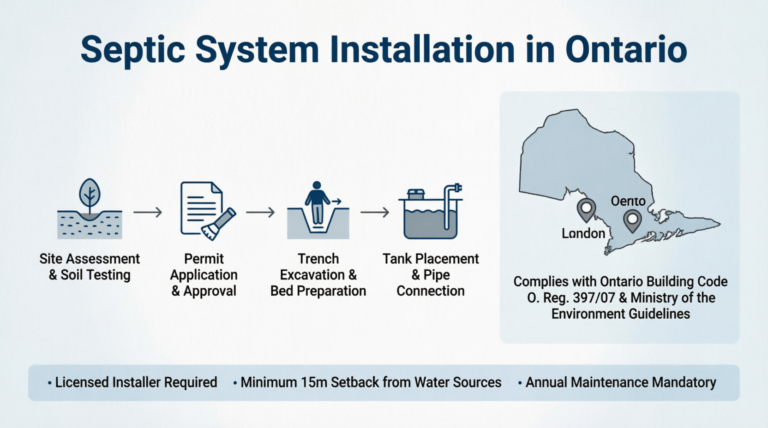
Septic areas need enough clear, workable space not only for installation, but also for grading, access, and sensible layout on the lot. Trees and stumps in the wrong place can affect both the install and the usefulness of the surrounding yard.
Clearing for excavation
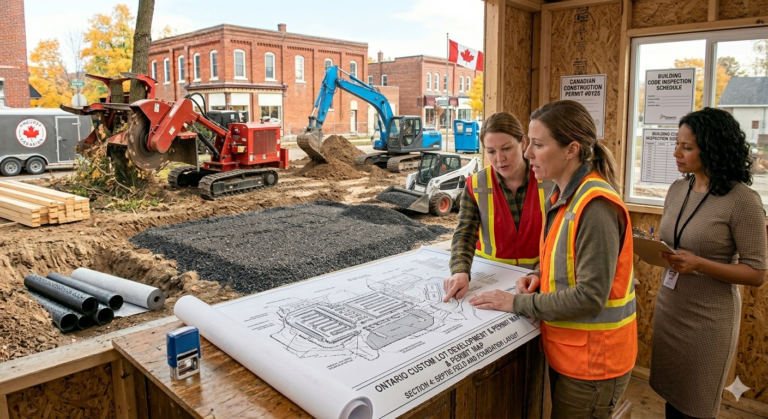
Excavation needs room for equipment, spoil placement, truck access, and safe movement. Trying to excavate in a space that is barely open usually means slower work, more site damage, and more money spent doing things the hard way.
If you are planning a new build, our page on site preparation before building in Simcoe County helps connect the dots. And if the clearing is part of a full custom home project, Build With Us gives the broader picture of how the site work, structure, and finished home should come together in the right sequence.
Some lots have trees worth saving for lumber instead of turning everything into waste
One of the more interesting parts of lot clearing is that not every tree has to end its life as a brush pile. On some Georgian Bay properties, there can be usable timber worth milling for future use. That might mean boards for a shed, interior accent material, rough lumber for farm-style uses, or simply making better use of what came off the property.
That does not mean every tree is mill-worthy. Species, size, straightness, condition, and handling all matter. But when it makes sense, on-site milling or salvaging good timber can be a smart move. It reduces waste, respects the site a little more, and gives the homeowner something useful back from the clearing process.
The biggest price swings usually come from access, density, terrain, and what happens after the cutting
Homeowners often want one clean square-foot number for lot clearing, but the truth is the cost depends heavily on what kind of lot you actually have. A lightly treed property with easy access is one thing. A dense, rocky, sloped site with stumps, wet spots, and a long private entry is a very different conversation.
Cost usually moves because of:
- Density of trees and brush
- Size and number of stumps
- Machine access and hauling distance
- Rock, slope, and wet conditions
- Need for driveway or road opening
- Cleanup, disposal, chipping, or milling decisions
- How much of the lot must be cleared versus selectively opened up
If you want the pricing side in more detail, read our page on lot clearing cost in Georgian Bay. It breaks down why one “clearing job” may be simple and another may look simple only from the road.
The best lot clearing jobs follow a clear sequence instead of making the site up as they go
Good lot clearing usually follows a straightforward process. That sounds obvious, but you would be amazed how many site headaches begin with someone clearing first and thinking later.
Identify what has to fit on the property and what should stay versus what must go.
Create practical entry and working routes so machines and materials can move properly.
Remove brush, trees, and stumps according to the build plan, not by random enthusiasm.
Leave the site ready for excavation, driveway work, septic, and the actual build.
That final point matters most. A lot clearing job is successful when the next trade can arrive and start work efficiently, not when the property merely looks emptier.
Lot Clearing Georgian Bay: common questions homeowners ask
What is included in lot clearing?
Lot clearing can include brush removal, tree cutting, stump removal, opening access routes, creating work areas, and cleanup of the material afterward. Some projects also include road openings, grading preparation, or evaluation of usable timber for milling.
Do I need to clear the entire lot?
Usually no. Most properties benefit from selective clearing, not total clearing. The smartest approach is to open up the areas needed for the house, septic, driveway, and machine access while preserving privacy, shade, windbreaks, and the best visual features of the property.
When should stumps be removed?
Stumps should be removed wherever they interfere with grading, foundations, driveways, lawns, septic areas, or safe access. Leaving stumps in future work zones often creates settlement issues, rework, and extra cost later when the next stage of the build is already underway.
Can I use the trees from my lot for lumber?
Sometimes, yes. Some lots have usable timber worth milling depending on species, straightness, size, and condition. Not every tree is suitable, but it is often worth evaluating whether good material can be salvaged before everything is chipped or hauled away.
Why does access affect lot clearing cost so much?
Because access affects everything. If equipment and trucks can move easily, the work is faster and more efficient. Poor access means smaller equipment, slower progress, more handling, and often more site disruption. It is one of the biggest hidden drivers of lot clearing cost.
Should lot clearing be planned together with septic and excavation?
Absolutely. Lot clearing works best when it is tied to the next stages of the project. The property should be opened up with the house location, driveway, septic area, excavation plan, and staging needs already in mind. That avoids rework and saves money.
What makes Georgian Bay lots different?
Many Georgian Bay lots are wooded, irregular, rocky, sloped, or tight. Some also have difficult access or shoreline-related sensitivities. That means clearing often needs more planning and more selective decision-making than it would on a simple open rural lot.
Is brush removal enough to make a site build-ready?
No. Brush removal may improve visibility and access, but a site is not really build-ready until the important trees are addressed, stumps are handled where needed, access is practical, and the clearing work supports the next construction steps.
Need lot clearing in Georgian Bay that actually prepares the site properly?
Whether you are clearing for a new home, a cottage, a septic area, a driveway, or a private road, the right approach is to clear with the finished project in mind. That means protecting what should stay, removing what must go, and leaving the site ready for the next stage instead of leaving you with an expensive outdoor puzzle.