Septic Systems Georgian Bay: Installation, Replacements, Filter Beds, and Lot Reality
A septic job can look simple on paper and turn into a full-contact sport once the machines show up. Around Georgian Bay, one lot has clean access and sandy soil. The next one has rock, trees, tight setbacks, wet ground, and a driveway that feels like it was designed by a canoe. That is why septic pricing can swing hard, and why “ballpark” numbers often fall apart the moment real site conditions enter the chat.
Most septic problems begin long before the tank goes in the ground
People often think a septic system is just a tank and some stone in the yard. It is not. It is a site-planning job, an excavation job, a grading job, and a lot-constraints job all pretending to be one line item.
The real question is not “How much is a septic system?” The real question is “What will this lot allow us to build, where can it go, and what has to happen around it to make the whole property work?”
That matters even more around Georgian Bay. These are often beautiful properties, but beautiful lots are not always cooperative lots. Trees, slopes, shallow soil, irregular setbacks, wet spots, bedrock, shoreline restrictions, and awkward machine access can all change the design and the cost. One homeowner pictures a neat backyard install. Then the site visit happens, and suddenly the septic area, driveway, grading, drainage, and house footprint are all having a family argument.
Quick takeaways
- Lot conditions usually decide more than anybody’s wish list.
- Replacement jobs are often more difficult than new septic installs.
- Filter beds are usually about site reality, not fancy upgrades.
- Access, grading, rock, and wet ground can move pricing quickly.
- Septic planning should happen before the property is over-designed.
If you are still early in the planning stage, it helps to understand zoning rules for new homes in Ontario before the septic location starts backing you into a corner. And if you want the broader Ontario overview first, our guide to septic systems in Ontario is a good place to begin.
The two jobs look similar from the road, but they do not price the same way
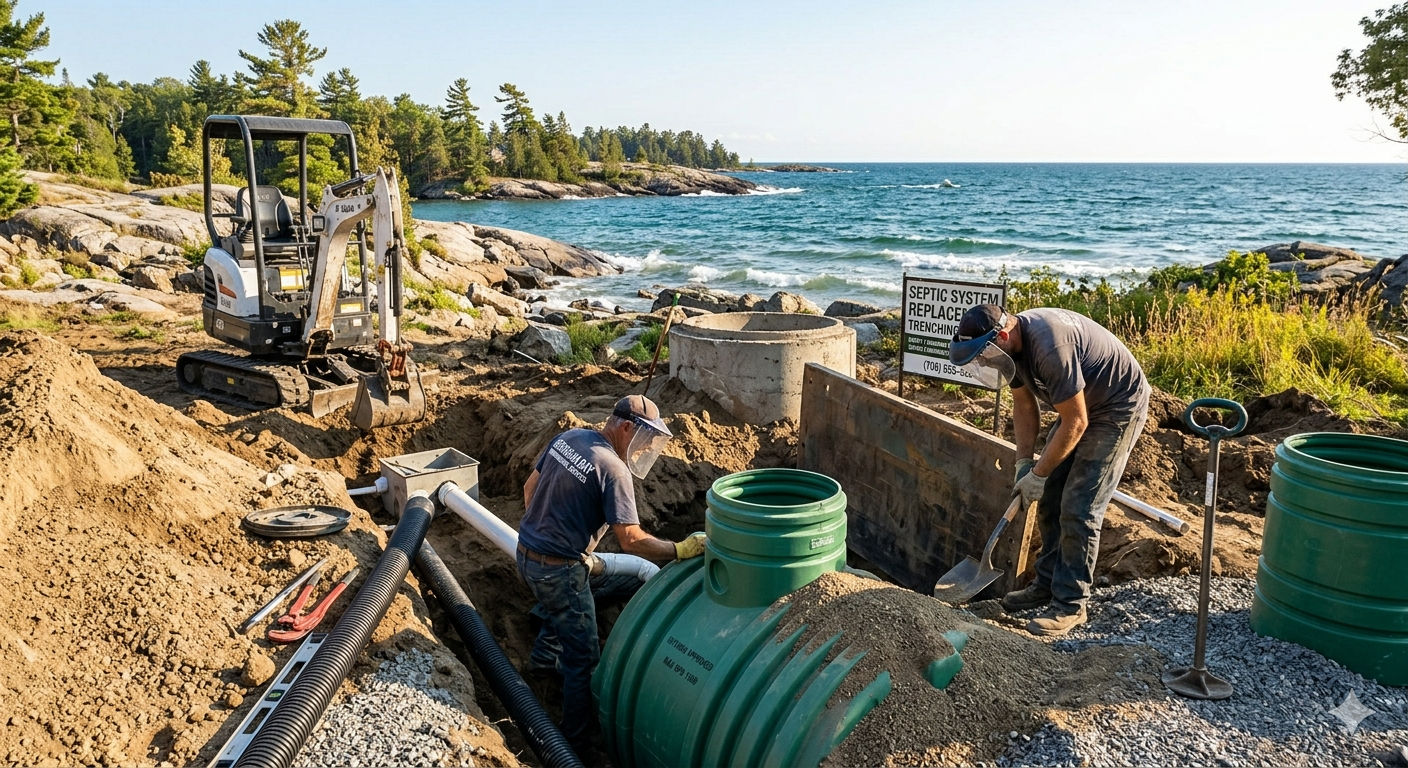
A brand-new septic installation and a septic replacement both involve excavators, trucks, materials, and approvals. But they are not the same job. They only look similar if you are standing far enough away not to hear the swearing.
New septic installations
These are usually tied to a house build, a vacant lot, or a major property plan. The septic system can be coordinated with the house, well, driveway, grading, drainage, and overall layout before everything gets boxed in.
Septic replacements
These jobs are often trickier because the lot is already in use. Now you are working around an existing house, decks, sheds, landscaping, driveways, utilities, access limits, and homeowners who understandably want the property to keep functioning while the system gets changed.
On a new build, the site can often be planned in a cleaner sequence. On a replacement, you are usually solving an active problem while protecting what is already there. That is why replacement pricing often surprises people.
| Job type | What usually drives complexity | What homeowners often miss |
|---|---|---|
| New installation | Lot layout, grading plan, soil conditions, setbacks, machine access | The septic location can affect the house footprint, well placement, driveway, and future landscaping |
| Replacement | Working around existing conditions, removal, re-routing, restoration, access limits | Keeping the property functional while changing the system is often the expensive part |
If your old system is failing, start with our page on septic replacement in Georgian Bay. If you are still trying to understand the price picture, our guide on septic system cost in Georgian Bay explains where the money usually goes.
The biggest cost drivers are not glamorous, but they decide everything
Septic quotes do not jump because somebody woke up feeling poetic. They jump because difficult lots need more machine time, more shaping, more imported material, more hauling, and more problem-solving.
Here are the things that move price the fastest:
- Machine access: If equipment can get in and out easily, life is better. Tight driveways, trees, fences, retaining walls, and steep entrances slow everything down.
- Rock and shallow soil: Bedrock may look great in a cottage photo. In excavation, it can become a budget line with an attitude problem.
- Wet ground and drainage trouble: High water, soft areas, and poor natural drainage affect design, preparation, and final grading.
- Imported sand, fill, and stone: Some sites need more material than people expect to build the system correctly and shape the lot afterward.
- Truck movement and haul distance: The more material that has to be moved around the property, or off it, the more time and money the job eats.
- Existing features: Decks, sheds, gardens, fences, mature landscaping, and finished lawns are nice until you need to work around them.
That is why excavation and site prep matter so much. Our page on excavation services in Georgian Bay breaks down the kind of groundwork that often has to happen before a septic install behaves properly. You can also look through our full services page to see how septic work ties into grading, access, drainage, and broader lot preparation.
When a standard approach does not suit the lot, filter beds often come into the conversation
Homeowners hear the words “filter bed” and sometimes assume it is some kind of fancy upgrade. Usually, it is the opposite. It is often the practical answer when the site conditions are not especially generous.
Around Georgian Bay, many properties are tighter, rockier, wetter, or less forgiving than a wide-open rural field. That can push the design toward systems that better suit the site conditions and the usable area available. The point is not to force one system onto every lot. The point is to build the one that actually works on your property.
Questions that usually come up
How much usable area do we really have? What are the soil and drainage conditions? How close are the house, well, property lines, and other constraints? Will imported material be needed? How does final grading work afterward?
What homeowners often get wrong
They picture a system before they understand the lot. Then they get attached to a backyard layout or house placement that the property itself simply does not support.
If that is the direction your project is heading, read our page on filter bed septic systems in Ontario. It explains why certain lots lean that way and what to think about before the design gets too far ahead of the site.
A good septic project follows a clean sequence instead of heroic improvisation
The best septic jobs are not the ones where everybody “figured it out on site.” Those are the jobs people retell later with a thousand-yard stare. The best jobs follow a sensible process.
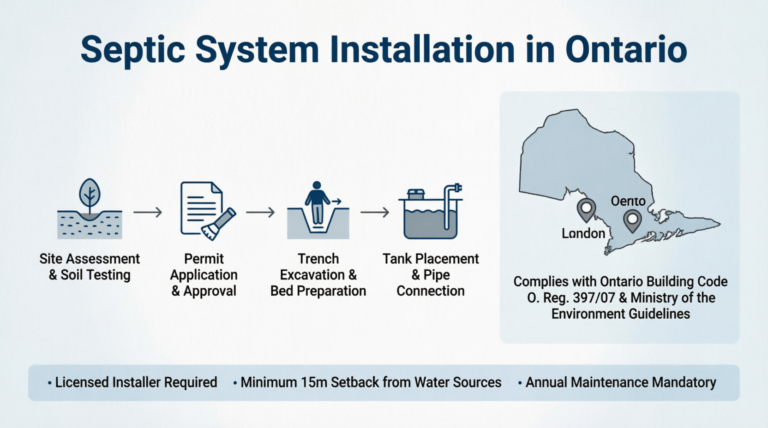
Look at access, grade, probable septic area, and how the system fits with the entire property.
Sort out setbacks, buildable area, house location, well location, and practical machine movement.
Do not rush the groundwork. Correct preparation costs less than fixing a bad setup later.
Final grading is part of the system strategy, not a rushed cleanup item done at the end.
This same thinking matters when the septic work ties into a bigger build. If you are also doing foundations or a new house, the site work needs to be coordinated properly. For related structural work, see ICF foundation contractor Ontario. And if the septic is part of a full custom build plan, Build With Us shows how the bigger picture can come together without one trade undoing what the last one just finished.
The smartest move is to treat the septic system like part of the lot, not an afterthought
By the time most people start asking septic questions, they are already picturing where the house goes, where the driveway goes, and where everyone will sit around the fire pit pretending they always loved site planning. That is normal. But the lot gets a vote. Around Georgian Bay, it often gets a loud one.
A septic installation or replacement goes better when you start with reality: access, grade, lot shape, constraints, and how the system fits with everything else you want on the property. That is how you avoid expensive redraws, awkward compromises, and those cheerful little surprises contractors sometimes deliver with perfectly straight faces.
If you want the project to go smoothly, start with the site itself. Look at the whole property. Make decisions in the right order. And do not design your dream backyard over the exact place the lot needs your septic system to live.
Septic Systems Georgian Bay: common questions homeowners ask
How do I know if I need a new septic system or a replacement?
If there is already a system on the property, the first question is whether it can remain in service, be repaired, or must be replaced. Age, condition, capacity, site limitations, and future use all matter. A replacement often costs more than people expect because the work has to happen around an existing, functioning property.
Why are septic jobs in Georgian Bay often more complicated?
Because the lots themselves are often more complicated. Rock, slopes, wet areas, tree cover, shoreline concerns, tight access, and irregular setbacks can all affect design and installation. In this region, septic work is often part of a broader site strategy rather than a simple one-line item.
What affects septic cost the most?
The biggest cost drivers are usually excavation difficulty, rock, imported material, grading, machine access, wet conditions, truck movement, and working around existing features. People tend to focus on the visible parts of the system, but the expensive part is often everything required to make it fit and function properly on the actual lot.
Are filter beds common around Georgian Bay?
They can be, especially on tighter or more difficult lots where the site conditions make other layouts less practical. A filter bed is not automatically the answer for every property, but it often enters the conversation when the lot is less forgiving and the system needs to suit real-world conditions rather than ideal ones.
Should septic planning happen before I finalize the house design?
Yes. Septic planning should happen early because it affects house location, driveway placement, grading, usable yard area, and often the well location too. Designing first and checking later is one of the easiest ways to waste time, money, and patience.
Does machine access really make that much difference?
Absolutely. Good access saves time and money. Poor access can mean slower excavation, smaller equipment, more labour, more site disruption, and longer truck movement. It is one of those boring details that quietly controls whether the project goes smoothly or starts eating the budget.
How important is grading after the septic install?
Very important. Final grading is part of the system’s success, not a cosmetic add-on. Poor grading can create drainage trouble, soft areas, surface water issues, and long-term headaches. A good septic project ends with the lot shaped properly so water goes where it should.
What should I have ready before asking for pricing?
Have as much lot information as possible: site plan, house location if known, access details, existing system information if applicable, and a clear description of what you are trying to build or replace. Even when firm pricing cannot happen immediately, that information helps move the conversation from guessing to real planning.
Can septic work be coordinated with excavation for a house or foundation?
Yes, and in many cases it should be. Coordinating septic work with excavation, grading, drainage, and foundation-related work can create a cleaner sequence, avoid rework, and reduce site chaos. The key is looking at the project as one property plan instead of several unrelated jobs.
What is the best first step if I think my lot may be difficult?
Start by treating the lot itself as the project. Look at access, grade, likely septic area, constraints, and how the property needs to function once the work is done. That first reality-based review often saves far more money than trying to fix assumptions later.
Need a septic system in Georgian Bay without the guessing game?
Whether you are planning a new installation, replacing a failed system, or trying to figure out whether a filter bed makes sense, the right place to start is the lot itself. We look at access, grading, constraints, and the real site conditions that affect cost before the job turns into a surprise nobody asked for.