Basement Excavation in Wasaga Beach: What Homeowners Need to Know Before Digging
A practical, homeowner-friendly guide to doing basement excavation right in Wasaga Beach and the surrounding Georgian Bay area.
Planning to add a basement, dig out an existing crawl space, lift your home, or build new in Wasaga Beach? Good. A proper basement gives you year-round usable space, better energy efficiency, and a more valuable home. But here’s the part many homeowners don’t realize: the success of a basement is determined long before concrete is poured. It’s determined during excavation.
Wasaga Beach has its own soil patterns, drainage issues, and water table behaviors that are different from Collingwood, Tiny, Barrie, or anywhere else inland. If excavation isn’t done right the first time, you don’t just get cracks—you get water intrusion, frost heave, shifting foundation walls, sump pumps that never stop running, and sometimes even full-on structural failure.
So let’s walk through basement excavation the right way—specifically for Wasaga Beach conditions.
Why Basement Excavation in Wasaga Beach Is Different
Digging a basement in Wasaga Beach is not the same as digging one in Midland, Orillia, or Toronto. The land here is shaped by Georgian Bay winds, ancient dunes, seasonal flooding cycles, and localized sand and clay layering.
Here’s what makes excavation here unique:
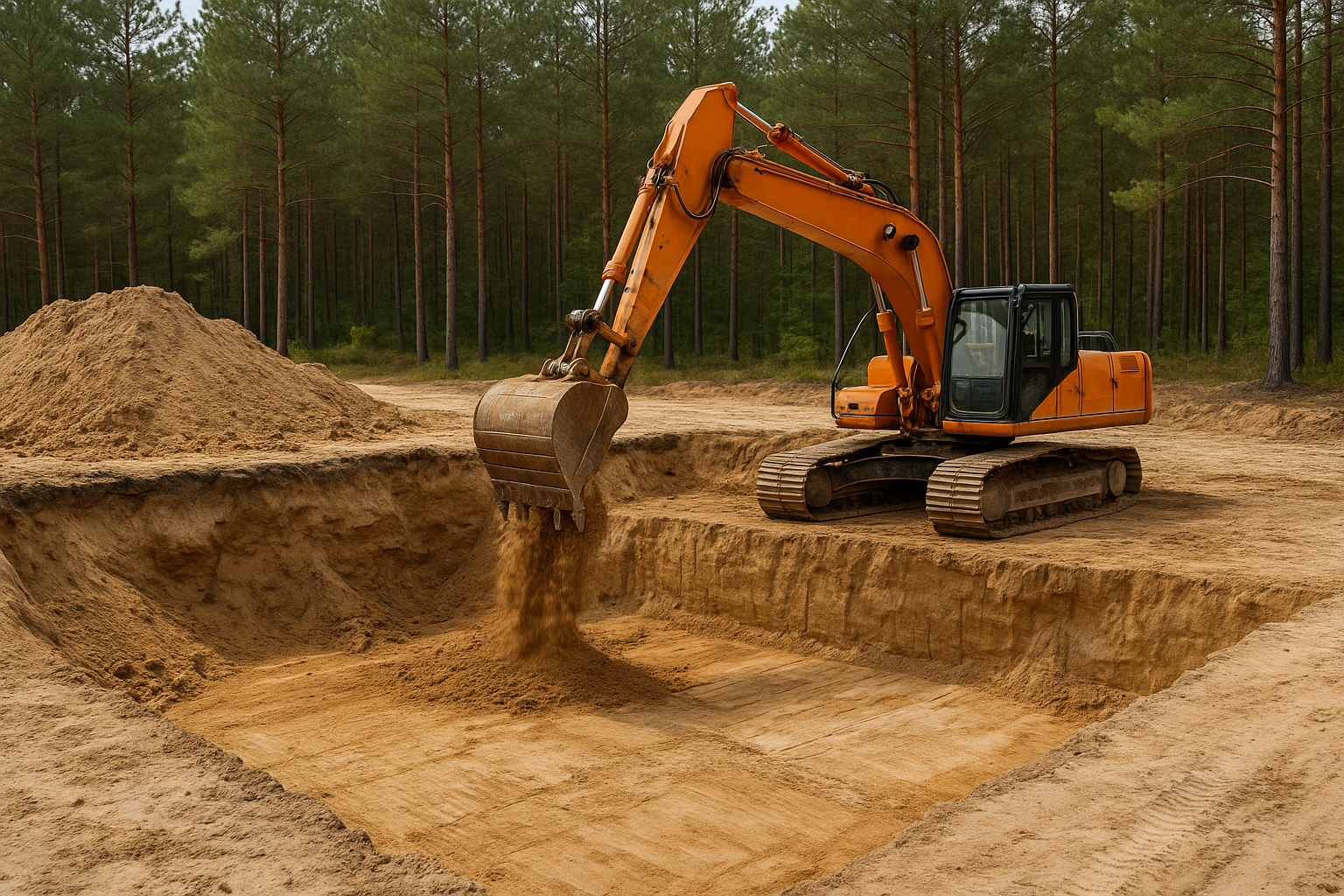
- Sandy Soil Dominates: The sand drains well, but it also shifts and collapses if unsupported. Walls must be properly sloped or shored.
- High Water Table: In many lots, water sits closer to the surface than expected. Excavation must account for seasonal fluctuation.
- Freeze and Thaw Cycles: Wasaga’s winters cause frost to move soil. Proper compaction and drainage prevent foundation lift.
- Windblown Sand Layers: Some layers are strong, others are loose. The contractor has to read the soil as they dig.
- Close Proximity to Georgian Bay: Lots near the river or wetlands require extra drainage planning & may involve conservation authority review.
This means excavation here is less about brute force and more about soil management, water control, and structural planning.
Step-by-Step: How a Proper Basement Excavation Happens
1) Site Assessment & Survey
Before equipment rolls onto the property, the site needs to be surveyed. We confirm:
- Lot boundaries
- Setbacks and zoning restrictions
- Driveway and equipment access routes
- House placement and elevation relative to the road
The house elevation is a big one. Set the house too low and water will run toward the foundation forever. Set it too high and the driveway becomes a ski hill. There is a sweet spot—and we calculate it before digging.
2) Soil & Water Evaluation
If the site has a high water table, additional drainage systems or engineered foundation designs may be required. In Wasaga, this is common—not a surprise.
If someone tells you “don’t worry, we’ll figure it out when we dig,” that’s your sign to choose someone else.
3) Excavation & Shaping
The excavation is done gradually, in controlled passes, not one giant scoop at a time. Walls must slope back or be temporarily supported to prevent collapse.
This is where experience matters the most.
4) Foundation Footing Preparation
The ground beneath the footing must be:
- Flat
- Compacted
- Stable
- Consistent across the entire base
A footing is only as good as what it sits on. If soils vary, we fix that before forming and pouring concrete.
5) Drainage & Waterproofing Planning
We install:
- Perimeter drain tile
- Gravel drainage bed
- Sump pit and pump (if needed)
- Waterproof membrane on exterior foundation walls
In Wasaga Beach, waterproofing is not optional—it’s essential.
What Can Go Wrong (and How to Avoid It)
Common excavation mistakes in Wasaga Beach include:
- Over-excavating then relying on weak fill instead of native soil
- Failing to compact backfill properly → foundation walls crack over time
- Ignoring the water table → pumps run constantly, or worse, basements flood
- Incorrect elevation setting → water drains toward the house
- Skipping engineered drainage solutions because “the sand already drains well”
Every one of these mistakes is preventable. And every one costs 3–30× more to repair after construction than to prevent up front.
How Much Does Basement Excavation Cost in Wasaga Beach?
Costs vary depending on:
- Excavation depth
- Site access (room for machines)
- Soil type
- Need for shoring or dewatering
- Foundation shape and footprint
But typical regional ranges look like this:
- New home basement excavation: $12,000–$28,000+
- Digging out an existing crawlspace: $25,000–$60,000+
- Basement underpinning / lowering: $35,000–$100,000+ (depending on structure)
If someone is quoting dramatically lower than these ranges, they are skipping something critical: compaction, drainage, elevation planning, soil testing, or waterproofing.
Permits and Approvals
You may interact with some or all of these agencies:
- Town of Wasaga Beach – Building & Planning
- County of Simcoe – Building Permits
- Nottawasaga Valley Conservation Authority – Planning & Permits
If your property is near wetlands, rivers, or floodplain zones, the NVCA may require assessments and approvals. Don’t worry—we handle the conversations and paperwork regularly.
Signs Your Contractor Understands Wasaga Beach Soil
- They talk about elevation before talking about digging
- They mention water management and sump placement early
- They plan equipment access to avoid unnecessary damage to trees and driveway
- They adjust excavation slopes depending on sand density
- They do not dismiss the water table as “not a big deal”
If they don’t mention drainage in the first 10 minutes, they’re not your excavator.
Bottom Line
A basement is one of the most valuable parts of your home—but only if it’s excavated correctly. In Wasaga Beach, where sand, water, frost, and elevation are constantly working against you, the excavation stage is where you either build a dry, warm, structurally sound foundation—or problems you’ll live with forever.
The difference comes down to understanding the land.