Septic System Installation in Wasaga Beach: Built for Sandy, High-Water-Table Ground
Wasaga Beach sits on sandy Nottawasaga delta soil with a high water table near the river and beach — conditions that shape what septic system a lot can take. Here is how installation works here, and what your lot likely needs.
Septic in Wasaga Beach is shaped by the ground it sits in. The town is built on the sandy delta of the Nottawasaga River, and near the river and the beach the water table sits high. Sand drains quickly, which sounds ideal, but a high water table reduces the vertical separation a conventional leaching bed needs to treat effluent properly — and that is what often pushes a Wasaga Beach lot toward a raised or filter bed system.
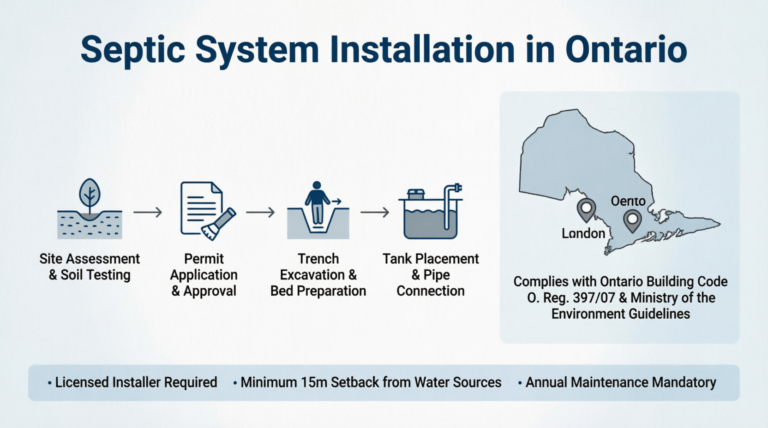
This page covers how a septic install works in Wasaga Beach, why the water table matters so much here, and the approvals involved.
Why the water table drives the system here
A septic bed needs a minimum depth of unsaturated soil beneath it to treat effluent before it reaches groundwater. On a high-water-table lot near the Nottawasaga River or the shore, there simply is not enough separation for a conventional in-ground bed. The fix is to raise the bed — a raised or filter bed built up on imported sand restores the required separation above the water table.
Permits and approvals in Wasaga Beach
A new or replacement septic system needs a sewage-system permit under Part 8 of the Ontario Building Code, issued in this region by the Simcoe Muskoka District Health Unit (SMDHU). Unlike north Simcoe, Wasaga Beach is within a conservation authority: the Nottawasaga Valley Conservation Authority (NVCA). On regulated lots near the river, the beach or mapped floodplain, an NVCA approval is submitted alongside the SMDHU permit. We prepare and submit both so the install is legal and inspected.
What drives the cost
| Factor | Effect on cost |
|---|---|
| Raised / filter bed | High-water-table lots usually need imported sand and a built-up bed. |
| System size | Driven by bedrooms and daily flow. |
| NVCA approval | Regulated lots add coordination time. |
| Access & restoration | Tight lots and finish grading affect the number. |
Installing septic in Wasaga Beach?
Start with a soil evaluation. We design, permit and install septic systems built for Wasaga\u2019s sandy, high-water-table ground — health-unit permit and NVCA approval handled.
Frequently Asked Questions
Why do so many Wasaga Beach lots need a raised or filter bed?
Because of the high water table near the river and beach. A conventional in-ground bed needs unsaturated soil beneath it to treat effluent; where the water table is high, the bed is raised on imported sand to restore that separation.
Do I need NVCA approval for a septic system in Wasaga Beach?
On lots regulated by the NVCA — many near the river, beach or floodplain — yes, submitted alongside the SMDHU permit. We confirm whether your lot is regulated and handle both approvals.
Who issues the septic permit?
The Simcoe Muskoka District Health Unit, under Part 8 of the Ontario Building Code. We prepare and submit the design and see it through inspection.
How do I get a quote?
Book a soil evaluation. We dig a test pit, find the water table, confirm the approvals, and give you a written price for the system your lot actually needs.