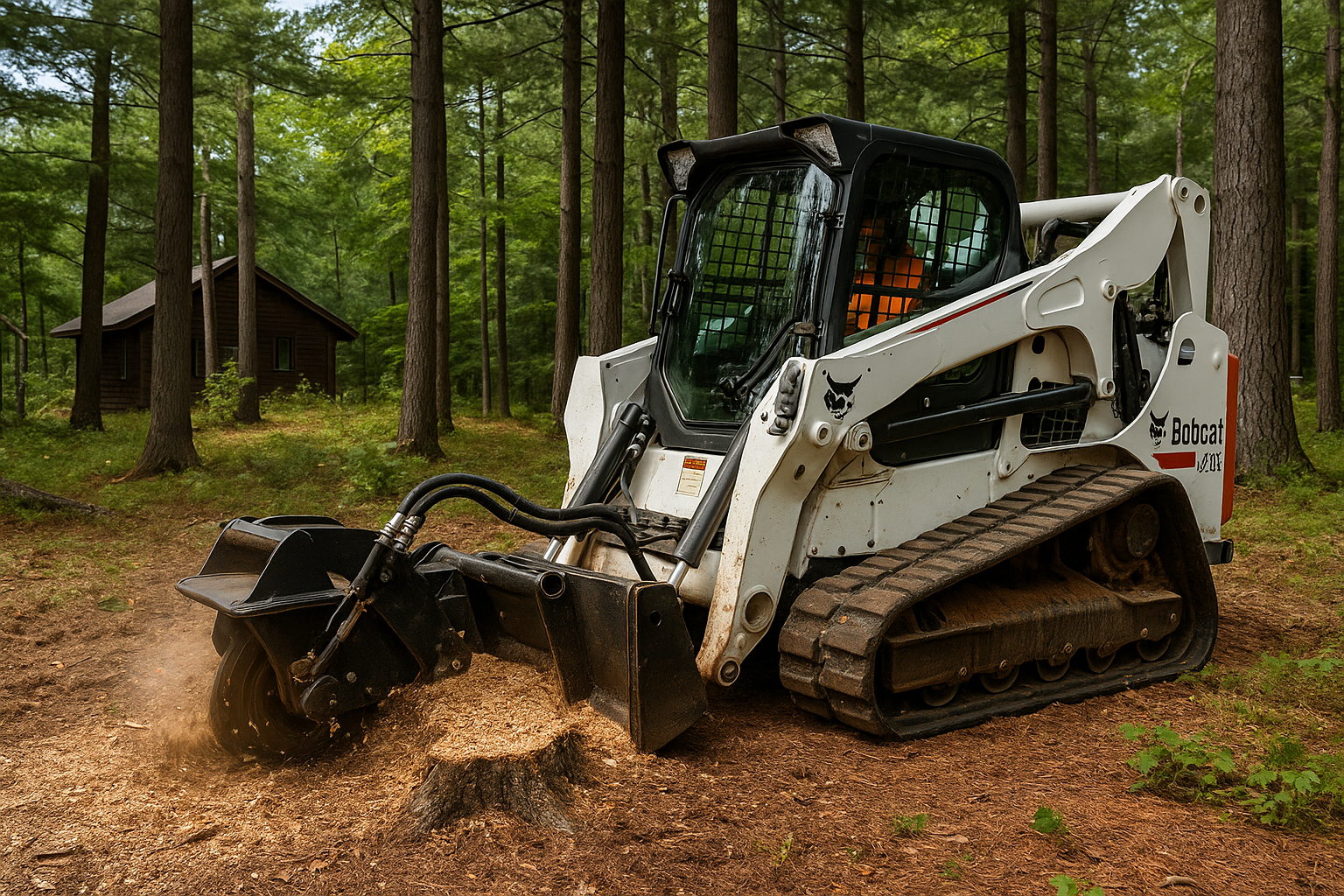
Excavation Services Tiny Township: Local Site Work for Lots That Are Rarely as Simple as They Look
Excavation in Tiny Township is not just about digging holes. It is about reading the lot properly before the lot teaches you a costly lesson. Trees, soft areas, long rural driveways, septic zones, shoreline sensitivities, wetlands, and awkward access all change how site work should be planned and performed.
Tiny Township has a way of making a lot look easier than it really is. From the road, a property can seem straightforward. Then the machines arrive and the real story starts to show up. The entrance is tighter than it looked. The grade falls off more than expected. The lot stays wetter in one corner. The trees everyone wanted to save are exactly where the best access route would have gone. The septic area fights the driveway plan. Now the “simple” job is suddenly very educational.
That is why local excavation matters in Tiny. A crew that understands how rural properties in this area actually behave will usually make better decisions earlier. That means better sequencing, smarter access, less unnecessary disturbance, cleaner spoil handling, and fewer surprises once the site work gets moving.
Excavation is one of those trades that looks simple when somebody else is doing it well. But under the surface, it is really about judgment. Where should the machines travel? What should be cleared first? Where will the spoil go? What grades need protecting? How do you avoid boxing the rest of the project into a bad layout before the foundation even starts? Those are not bucket questions. Those are experience questions.
Why Tiny Township lots need a more practical approach
Tiny is full of rural and semi-rural properties that rarely behave like neat suburban lots. You can be dealing with tree cover, long entrances, wetlands nearby, soft ground, shoreline-influenced conditions, or big open lots that still have awkward drainage patterns hiding in them. That is why local site work needs to be planned around the actual property, not around a generic excavation checklist.
Wooded lots
Need selective clearing, protected routes, and a plan that saves the trees worth keeping while still giving the machines enough room to work.
Rural access
Often means longer driveway runs, soft shoulders, culvert questions, and more need for temporary construction access that can survive weather.
Wet or sensitive areas
Require more thought around grading, fill, spoil placement, drainage, and whether other agencies or approvals may be involved.
Large-lot layouts
Can look flexible on paper but still create conflicts between the house, septic system, driveway, drainage, and future outbuildings.
That is why excavation in Tiny often starts with understanding the lot, not racing to disturb it. The cleaner the thinking is at the beginning, the cleaner the site usually stays through the rest of the build.
Excavation is not the first decision. It is the result of earlier decisions.
People often talk about excavation like it is the first big job on site. Physically, yes, it is one of the first visible jobs. But in reality it is the result of planning choices that should already have been made. House placement, driveway logic, drainage direction, septic location, access routes, clearing limits, and spoil areas all affect how the excavation should happen.
That is why this local page ties directly into the broader process described on site preparation before building. Excavation is not a standalone event. It is part of a chain. If the earlier links are weak, the digging stage usually becomes the part where the weak planning gets expensive.
What excavation services in Tiny Township usually include
Most projects involve more than one type of digging. Even when the owner thinks they just need “excavation,” the scope usually touches several pieces of site work. Depending on the lot and the project, excavation services may include foundation digging, site cuts, trenching, rough grading, drainage-related work, driveway prep, septic-related excavation, and material movement around the property.
That is why this local spoke page connects back to the main Excavation Services Georgian Bay hub. The Tiny version is the same type of work, but with local realities layered over top: more rural conditions, more trees, more shoreline sensitivity in some areas, and more need for a crew that already understands how these lots behave.
- House and foundation excavation
- Driveway and entrance preparation
- Trenching for site utilities and drainage
- Rough grading and site shaping
- Septic-related excavation and coordination
- Clearing support and spoil handling
It is not that each one of these tasks is unusual. It is that the way they overlap on a Tiny property often matters more than people expect.
Trees, access, and spoil handling make or break rural excavation jobs
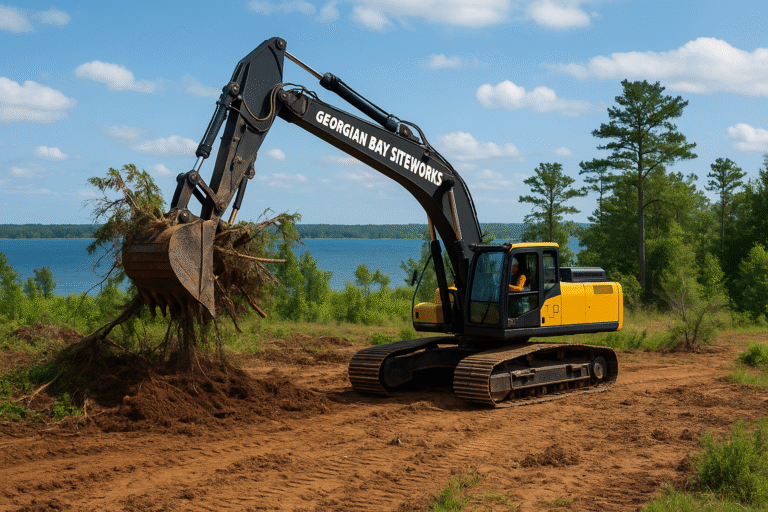
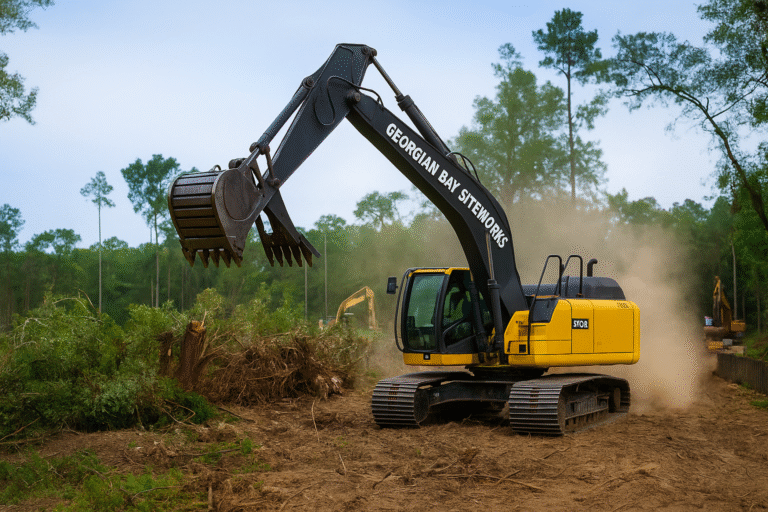
On a rural lot, the machine work does not just happen in one spot. Machines have to get in, turn, stockpile material, move around, and keep the site usable for the next trade. That sounds obvious, but a lot of excavation problems really come from poor access and poor spoil planning, not from the digging itself.
If the site is wooded, access gets tighter and every movement matters more. If the site is open but soft, the same problem shows up in a different form. Now it is not tree trunks limiting the route. It is ground conditions. Either way, the excavation has to be planned so the machine can work without chewing up the future yard, damaging the driveway route, or piling spoil where it interferes with drainage or septic.
Why access matters
It affects machine movement, deliveries, safety, schedule, and how much of the site gets disturbed just to keep the work going.
Why spoil handling matters
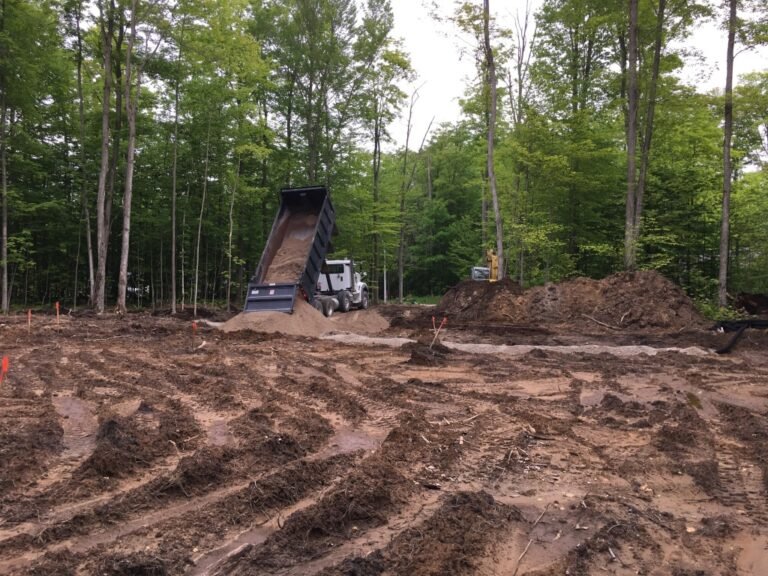
Excavated material has to go somewhere. If it goes to the wrong place, the site gets cluttered, muddy, blocked, or harder to grade properly later.
If the lot needs selective opening before excavation, this ties directly into lot clearing in Georgian Bay. Clearing and excavation are separate jobs, but on real properties they are closely related. When one is sloppy, the other usually gets harder.
Grading and drainage are not cleanup items after excavation
One of the most common mistakes on rural lots is to think the excavation happens first and the grading gets “figured out later.” That is backwards. Excavation should be done with the grading and drainage plan already in mind. Otherwise the cut, the spoil placement, and the machine movement can all work against the final site shape.
That is especially important in Tiny, where water does not always announce its habits politely. A lot can look fine on a dry day and tell a much different story during spring melt or after a hard rain. The excavation stage can either respect that reality or make it worse.
For the bigger picture on shaping the lot correctly, see Grading and Drainage Georgian Bay. Excavation and grading should be working together, not arguing with each other from opposite ends of the site.
Septic-related excavation needs to work with the whole property, not just one corner
On many Tiny Township lots, septic is one of the major layout drivers. That means excavation for the house, driveway, grading, and any future detached buildings has to respect where the septic system belongs and how it functions. Treating septic like a leftover detail is one of the fastest ways to create a property layout that feels cramped, awkward, or expensive to fix.
This is why local excavation crews need to understand how septic work ties into the rest of the property. If the spoil is placed carelessly, if machine routes disturb the wrong area, or if the excavation forces the lot into a tighter layout than necessary, the entire build feels that mistake later.
For that side of the job, see Septic Systems Georgian Bay. If the long-term plan includes a second building or additional living space, future use matters too, which is why pages like Garden Suite Builder Simcoe County can be relevant before the digging decisions get locked in.
Why a local Tiny Township crew matters
There is a difference between owning equipment and understanding local ground work. In Tiny, a local crew matters because the work is often less about brute force and more about reading the property correctly. Local crews are more likely to understand the rhythm of rural approvals, lot grading expectations, access headaches, shoreline-adjacent sensitivities, and the difference between a lot that looks workable and one that is actually ready to move on properly.
That local knowledge shows up in small decisions that save money:
- choosing a better access path the first time,
- protecting trees that should stay,
- spotting drainage trouble before it becomes visible trouble,
- keeping spoil out of future problem areas,
- coordinating better with septic, builders, and later trades.
That local context also matters on the house side. If your excavation is part of a full custom build plan, these related pages help connect the dots: Custom Home Builder in Tiny Township and Build With Us.
Wetlands, shoreline areas, and approvals can change what “simple excavation” means
Some Tiny Township properties come with extra sensitivity around wetlands, shoreline conditions, or site alteration controls. That does not automatically make a project impossible. It does mean the excavation work should be planned with more awareness from the beginning.
If the lot is near Georgian Bay, near regulated features, or in an area with additional local controls, the excavation may need to fit within a tighter approval path than the owner expected. That is another reason local knowledge matters. A crew that has seen these issues before is less likely to treat the site like an ordinary inland lot with no extra considerations.
On the planning side, it helps to understand zoning rules for new homes in Ontario and the broader Ontario Building Code framework, because excavation often feeds directly into the permit and site-development process.
The order of operations is usually where good excavation wins
Most excavation headaches are not caused by one terrible decision. They come from doing reasonable tasks in the wrong order. A sensible sequence for many Tiny Township projects looks something like this:
- Review the lot and rough layout for house, septic, drainage, access, and future structures.
- Confirm what clearing is needed and what should be preserved.
- Establish safe and workable access for excavation equipment and deliveries.
- Plan spoil areas so material movement does not fight the rest of the site.
- Excavate with the grading plan in mind, not just the hole dimensions.
- Protect septic, drainage, and future routes instead of disturbing them by accident.
- Leave the site workable for the next trades instead of leaving them a muddy puzzle.
The common excavation mistakes local experience helps avoid
| Mistake | What usually happens next | Why it hurts |
|---|---|---|
| Rushing the dig before the lot layout is settled | Driveway, grading, or septic conflicts show up later. | You end up fixing planning mistakes with machine time. |
| Ignoring access and spoil handling | The site gets blocked, messy, or torn up. | Even good digging looks bad when the lot becomes unusable. |
| Clearing too much | The property loses privacy and useful protection. | You cannot easily undo over-clearing on a rural lot. |
| Not respecting water movement | Soft spots, trapped runoff, and ugly grading problems appear. | Water problems are cheaper to avoid than to repair. |
| Treating septic as somebody else’s issue | The lot layout gets tighter and future work gets harder. | Septic affects the whole site, not just the septic area. |
| Using a non-local approach on a local lot | The job misses the little conditions that matter here. | In Tiny, the little conditions are usually the ones that bite later. |
What a good excavation start feels like
When excavation is planned properly, the site starts to feel more organized with each step instead of more chaotic. The access makes sense. The clearing feels intentional. The spoil is not in the way. The house location works with the septic and grading. The next trade is not arriving to a muddy mystery. That kind of start does not happen by accident.
It happens when somebody looks at the lot the way an experienced local crew looks at it: not as an empty space to attack, but as a working system that has to keep making sense after every machine leaves. That is the real value of excavation done well in Tiny Township. It is not only about moving dirt. It is about moving the project forward without creating unnecessary problems under the dirt, beside the dirt, and all around the dirt.
That may not sound glamorous, but in construction the boring, sensible, well-sequenced decisions are usually the ones that save the most money. And on Tiny lots, that is exactly where good excavation earns its keep.
Planning a build in Tiny Township?
Get the site work handled by a crew that understands rural access, local lot conditions, trees, drainage, and the sequencing that keeps excavation from turning into rework. Good digging is important. Good judgment is even better.
Frequently Asked Questions
What kinds of excavation work do you usually do in Tiny Township?
Typical work includes foundation excavation, trenching, rough grading, driveway and entrance prep, site cuts, drainage-related excavation, septic-related digging, and material movement around rural and semi-rural lots. The exact scope changes by property, but the big goal is always the same: make the site work properly before the rest of the build depends on it.
Why is a local Tiny Township excavation crew better than a generic outside crew?
A local crew is more likely to understand how Tiny lots behave in real life. That includes tree cover, wet areas, rural access issues, shoreline-adjacent sensitivities, grading expectations, and the way septic, drainage, and house placement often compete for the same space. Those small local judgments usually save money later.
Do rural Tiny Township lots usually need more site prep than people expect?
Very often, yes. From the road, a lot can look simple. Once the job begins, the real site conditions show up: soft areas, awkward entrances, water issues, tree preservation concerns, or conflicts between the driveway, house, and septic layout. That is why site preparation and excavation need to be treated as planning work, not just machine work.
How does excavation connect to grading and drainage?
Excavation shapes the site early, which means it directly affects how final grades and drainage will work later. If the excavation and spoil handling are done without the grading plan in mind, the lot can end up harder to finish properly. Water control should be part of the conversation before the digging starts, not after the problems appear.
Do trees and wooded lots change the way excavation should be done?
Absolutely. On wooded properties, route planning matters more, spoil placement matters more, and machine movement matters more. Good excavation on a treed lot is usually about selective disturbance and better sequencing, not just clearing everything in sight and hoping the site looks good afterward.
What if my lot has wet areas or is near wetlands?
That usually means the site needs more careful planning and possibly a closer look at approvals, drainage, and disturbance limits. Excavation may still be possible, but the project should not be treated like a standard dry inland lot with no added considerations. That is where local knowledge becomes especially useful.
How does excavation affect septic planning?
Excavation affects access, spoil areas, grades, and the overall layout of the lot, so it absolutely affects septic planning. If those parts of the site are not coordinated, the property can feel cramped or awkward later. Septic is not a leftover decision. It is part of the core site layout.
Can excavation be done before the whole building plan is finalized?
Some early site work can happen before every last detail is locked down, but major excavation is much safer and smarter when the rough layout is already clear. The more settled the house, driveway, grading, and septic logic are, the less likely it is that the excavation will create conflicts you have to pay to fix later.
What is the most common excavation mistake on Tiny Township lots?
The most common mistake is assuming the lot is easier than it is. That leads to rushed sequence, poor access planning, sloppy spoil handling, or excavation that ignores water and septic realities. Tiny lots often need more judgment than they first appear to need.
Where should I start if I am just beginning the planning process?
Start with the lot itself. Understand access, trees, drainage, house placement, and septic possibilities before treating excavation like a quick first step. The better the early site thinking is, the smoother the excavation and the rest of the build usually become.