Phone:
(701)814-6992
Physical address:
6296 Donnelly Plaza
Ratkeville, Bahamas.
Phone:
(701)814-6992
Physical address:
6296 Donnelly Plaza
Ratkeville, Bahamas.
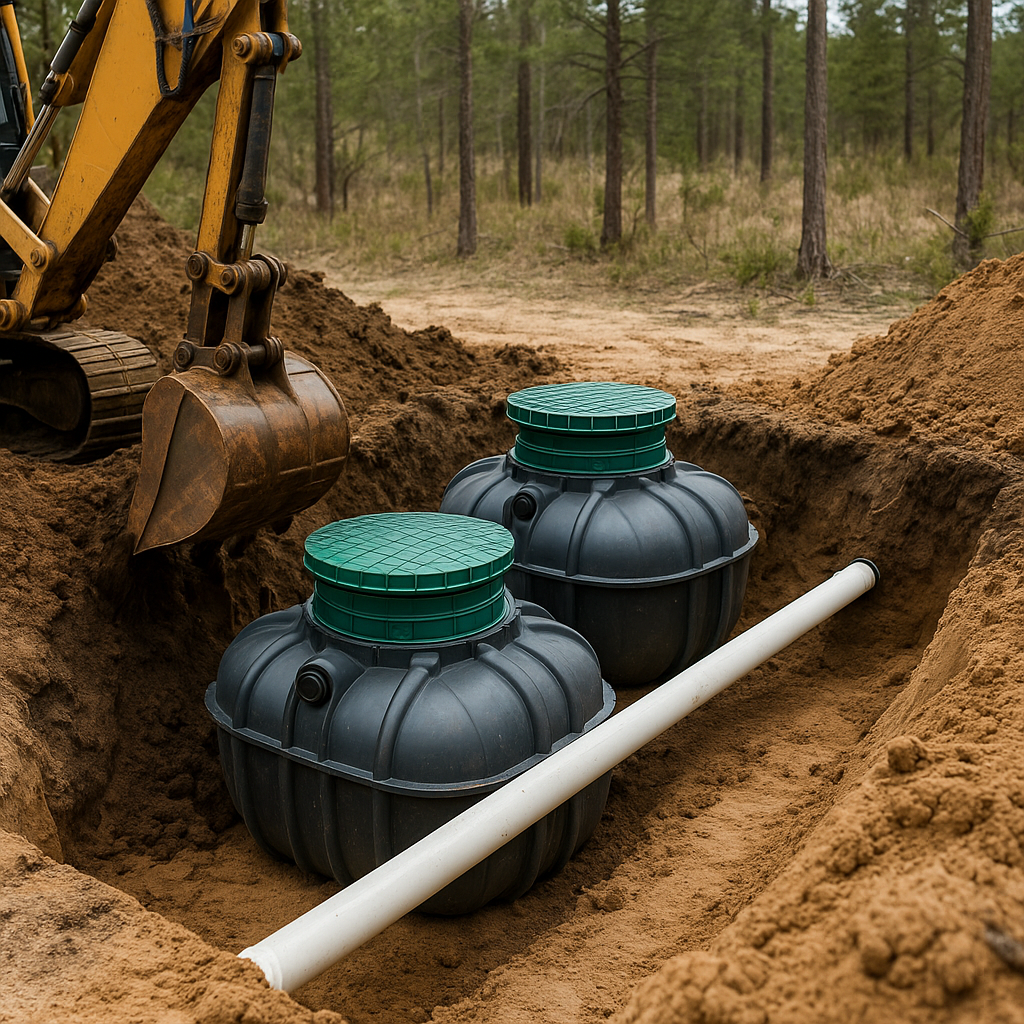
Wasaga Beach is famous for its sandy soils and high water table in places. That combination is great for beaches—but it changes how septic systems are designed and approved. If you’re planning a new build, a replacement, or a capacity upgrade, this guide walks you through permits, common system types here (including why filter beds are so prevalent), inspections, timelines, costs, and practical tips to keep your project moving.
Yes. Septic systems in Ontario are regulated under Part 8 of the Ontario Building Code. In Wasaga Beach, the Building Department reviews your application, issues the septic permit, and performs inspections. You can access the Town’s permit portal and septic package here:
For properties within a regulated area (shoreline, wetlands, floodplain, watercourses), you may also require approval from the Nottawasaga Valley Conservation Authority (NVCA). If you’re not sure, the NVCA encourages a quick property inquiry before you apply. Their permit application info is here: NVCA Permit Application (PDF).
Most local sites have very permeable sands. That can be good for effluent dispersion, but you must protect groundwater and meet setback and vertical-separation rules. Two realities drive designs here:
Because of that mix, filter beds (a constructed sand filter “area bed” meeting OBC specs) are extremely common across Wasaga Beach—they provide controlled, uniform treatment and separation when lot layout, groundwater, or space make an in-ground trench bed less practical. Where you’ve got room, proper native soil, and the required vertical clearances, a conventional in-ground leaching bed can still be used and is often the simplest/most economical.
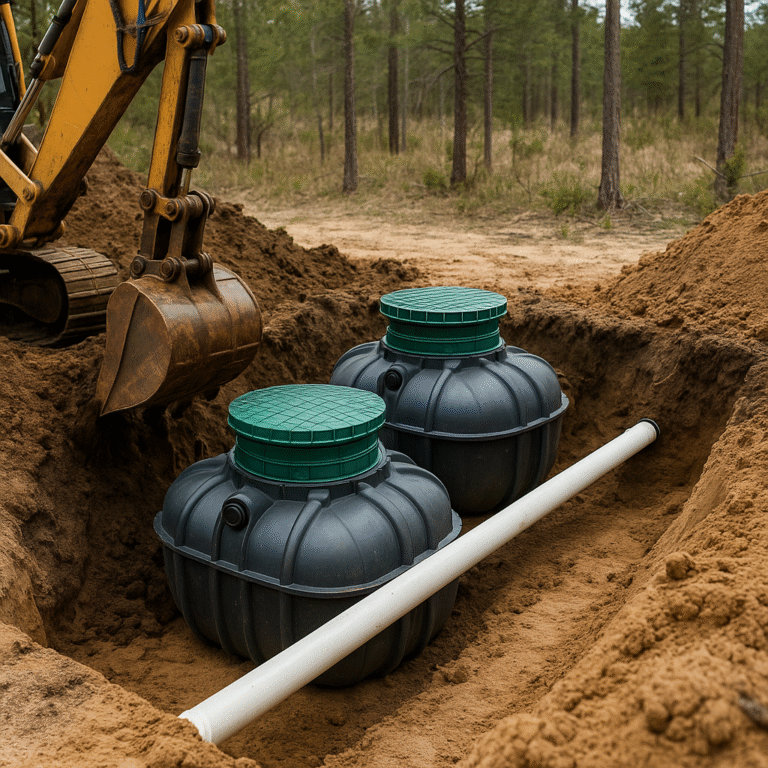
Best fit: larger lots with adequate native sand depth above the limiting layer (groundwater/rock). Effluent flows from the tank to a distribution network in native soil. Simple, proven, and often the lowest-cost option when the site cooperates.
Best fit: common in Wasaga Beach where space is tighter, groundwater is higher, or uniform treatment is desired. The bed is built with a specified sand layer and distribution piping per OBC Part 8, then covered and landscaped. Think of it as a designed “engineered” sand filter that behaves predictably in our soils.
Best fit: sites with high groundwater or limited native unsaturated depth. The bed is raised with imported sand/stone to maintain required vertical separation to groundwater while still dispersing effluent safely.
If your lot is challenging (very small building envelope, environmental constraints, or you need to reduce effluent strength before the bed), the designer may specify an approved treatment unit before the bed. These systems can reduce the required leaching area under OBC allowances, but they add equipment, maintenance, and power needs.
Your designer (BCIN or P.Eng. per OBC) will prepare sewage system calculations, a site plan showing tank/bed, elevations, distribution, and setbacks—these go in your Town application package (Town septic package PDF).
Picture a rectangular, engineered sand layer placed above native sand (or partially raised), with distribution pipes in gravel, covered by geotextile and topsoil. The designer specifies the sand gradation, loading rate, bed area, and cover thickness to meet OBC. Why it’s popular here:
Where there’s ample space, good native sand, and separation, an in-ground trench/area bed can be approved and is often cheaper to build and landscape.
Reality check: Local market rates and site constraints (tight access, dewatering, imported sand volumes) move the needle. Get a design-led estimate before you budget.
For homeowner-friendly references on how systems work and how to care for them, see Ontario’s Septic Systems overview and SepticSmart (PDF). OOWA also maintains helpful homeowner resources: oowa.org/homeowner-resources.
Only if it meets current OBC Part 8 and is in good condition—your designer/inspector will advise. Many replacements here are full system upgrades due to code changes and groundwater separation needs.
Neither is universally “best.” In Wasaga Beach, filter beds are common because they consistently meet treatment and separation in sandy, high-water-table conditions. If you’ve got space and verified native sand depth, in-ground can be simpler and cheaper.
If you’re near regulated features (shoreline, floodplain, wetlands, watercourses), likely yes. Start with their “Do I need a permit?” page to confirm.
OBC requires a qualified designer (BCIN) or professional engineer working to Part 8. The Town’s permit package includes the Schedule 1 Designer form and Schedule 2 Sewage System form (see Applications, Licences & Permits).