Phone:
(701)814-6992
Physical address:
6296 Donnelly Plaza
Ratkeville, Bahamas.
Phone:
(701)814-6992
Physical address:
6296 Donnelly Plaza
Ratkeville, Bahamas.
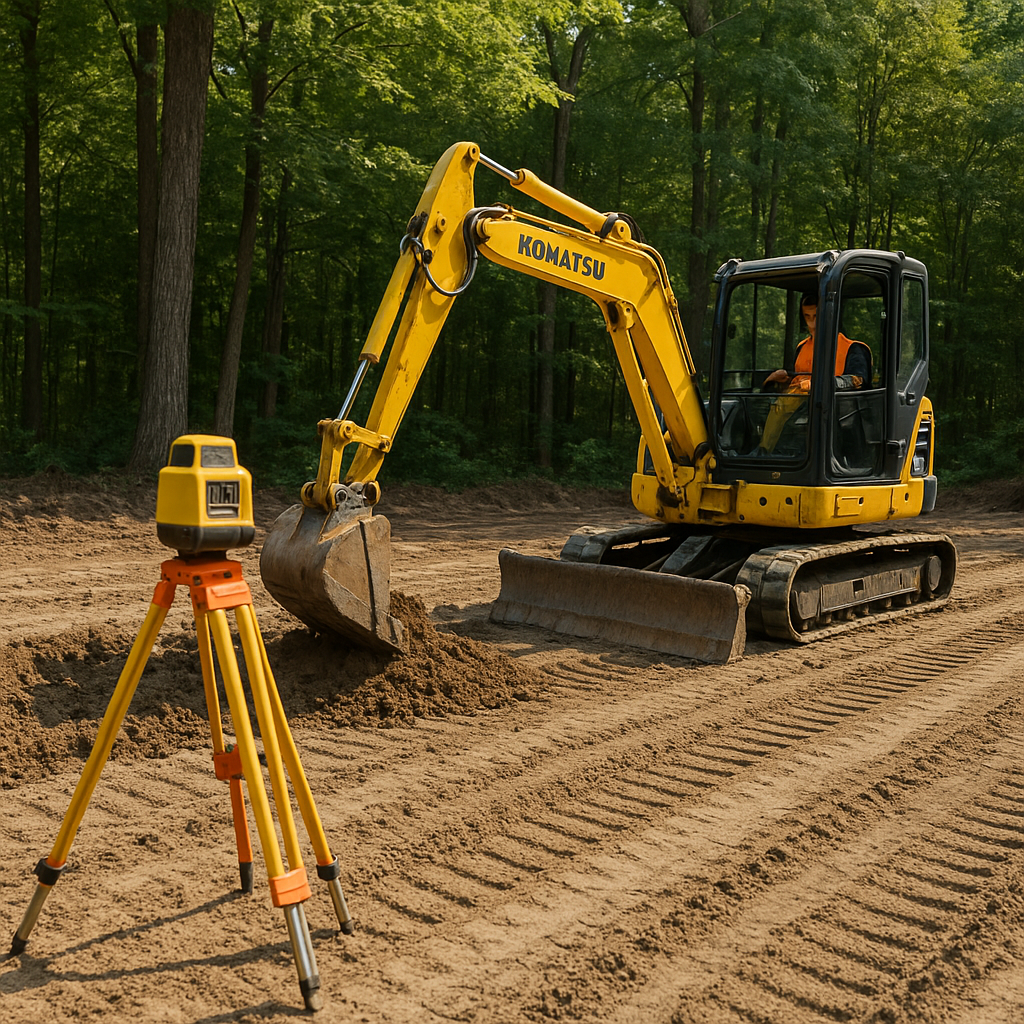
A practical guide for homeowners in Tiny, Lafontaine, Perkinsfield, Balm Beach, Woodland Beach, and the Awenda area.
Excavation might look simple from the outside—dig a hole, move some dirt, call it a day. But in Tiny Township, the land doesn’t play by those rules. One lot is pure sand straight to China. The next has bedrock sitting 8″ below the surface. Another one is a swamp in spring, bone-dry in August, and a skating rink in November. Some lots are on hills that move water wrong if you so much as blink at them.
Anyone can rent an excavator. But turning a piece of land into a buildable, stable, well-drained site in Tiny? That takes knowledge—local knowledge. The kind that only comes from working in these exact soils year after year, driveway after driveway, septic after septic, cottage after cottage.
The terrain here is a mix of:
Put simply: excavation here isn’t “digging.” It’s understanding how the land behaves.
If excavation is done incorrectly in Tiny:
And all of those problems cost a lot more to fix later than to prevent upfront.
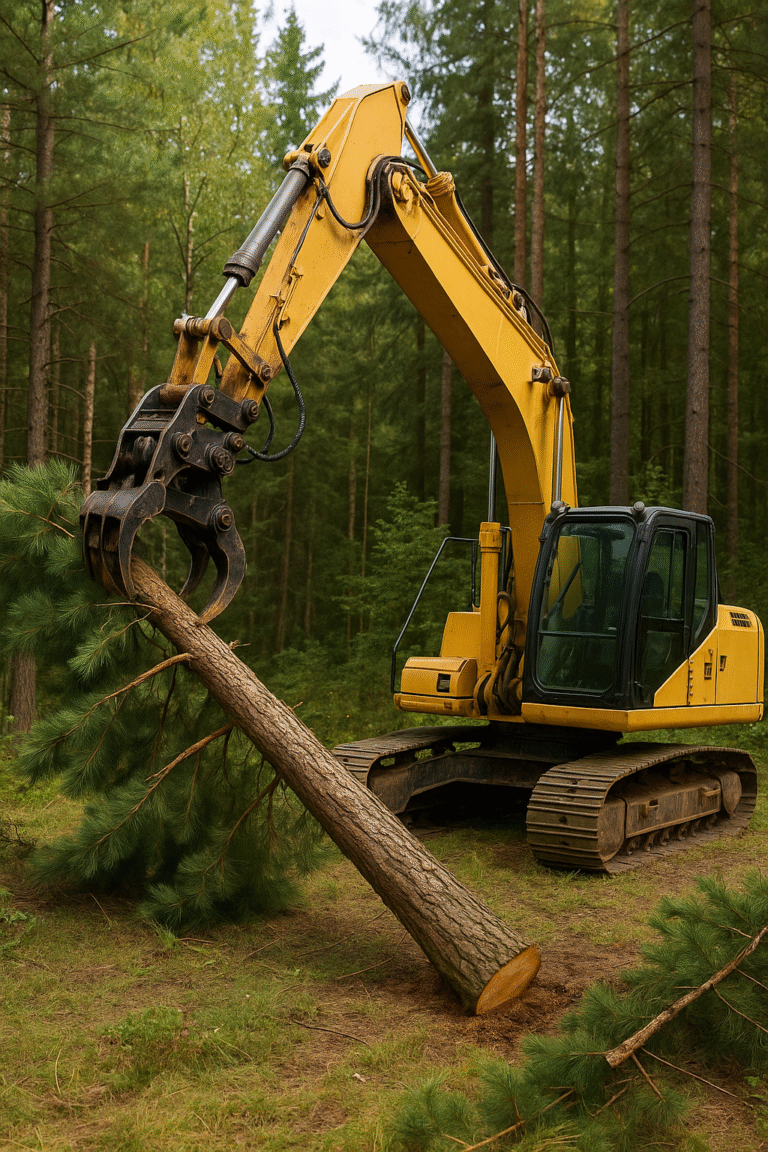
Before anything gets built, the site needs to be opened up. But we don’t clear every tree in sight just because a machine can. In Tiny, trees provide shade, privacy, and windbreak—so we clear strategically:
Water is either your best friend or your biggest problem. Our job is to make sure it flows away from the house, not toward it, and doesn’t end up pooling in the yard or driveway. This step is where Tiny’s sandy soils can be a blessing—but only when shaped right.
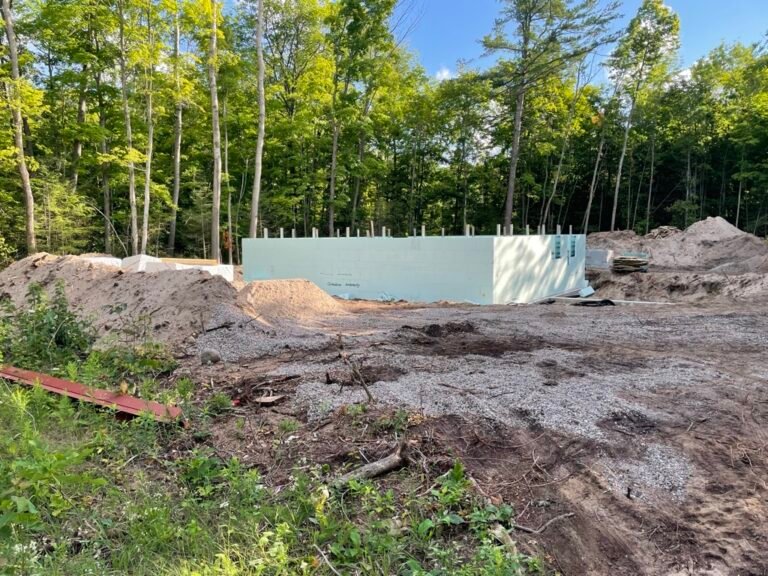
Whether it’s a new cottage near Awenda or a home in Woodland Beach, the depth, slope, and compaction matter. Excavation isn’t just “dig to the line.” It’s dig, shape, compact, and stabilize based on the exact soil type on that exact lot.
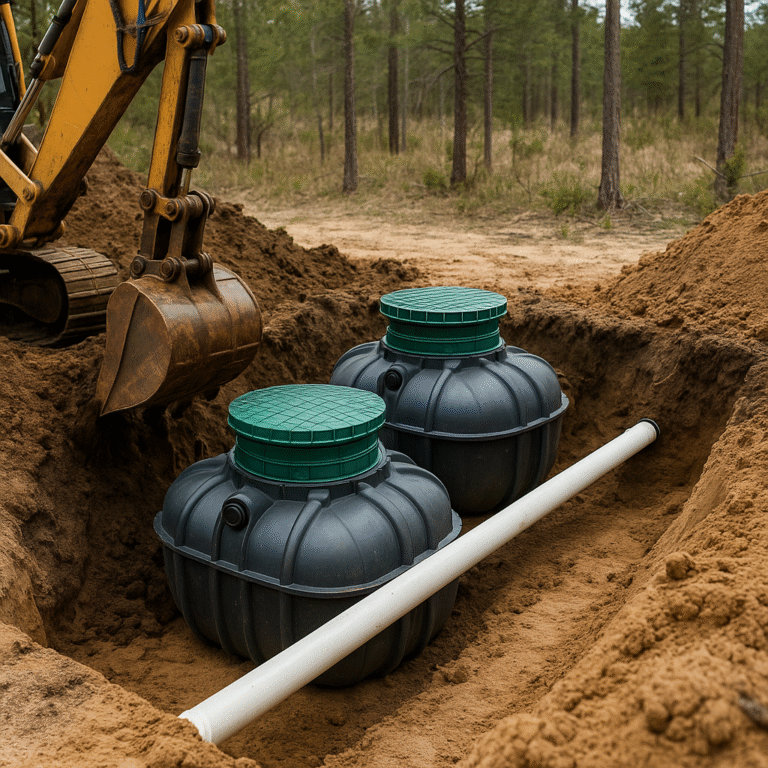
Most properties in Tiny rely on septic systems. Installing one properly means understanding:
Septic excavation is where Tiny’s soil quirks really show up—and where experience matters most.
Power lines, water lines, conduit runs, propane, geothermal loops—each has required spacing, slope, and depth. Trenching done right means no surprises—and no emergency dig-ups later.
Driveway base builds in Tiny require strength and drainage. A driveway isn’t just gravel—it’s:
Done right, the driveway lasts decades. Done wrong, it ruts the first spring.
Depending on your project location, these links may apply:
If your property is near water, wetlands, steep slopes, or ravines, the Nottawasaga Valley Conservation Authority may have a say. We deal with them regularly and can walk you through the process.
Most of these issues come from one thing: someone didn’t understand the land before they dug.
Excavation in Tiny Township is not generic “dirt work.” It’s understanding soil, water, rock, trees, and seasonal changes. It’s planning the site so that things stay dry, stable, and long-lasting—not just during construction, but for decades after.
The land here rewards the excavator who listens to it—and it punishes the one who assumes every lot behaves the same.
Excavation Services in Tiny = excavation done with local knowledge.